Memory Series
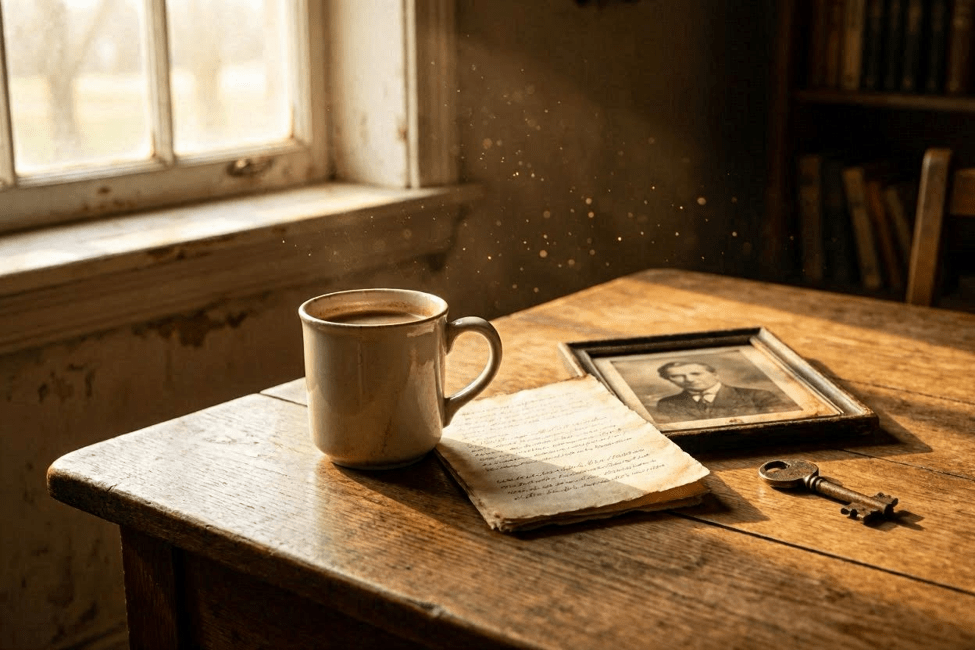
There exists a quiet, almost invisible geography within our homes, populated by objects that no longer serve any practical purpose. They do not work. They turn no gears, illuminate no dark corners, and solve none of the ordinary, grinding problems of daily life. They possess no real monetary value; if appraised by an outsider, their worth would be calculated purely by the volume of refuse they might add to a bin. If a stranger walked into our living rooms and noticed them resting on a high shelf or tucked away in a forgotten drawer, they would likely see nothing more than clutter—the accumulated remains of a life that has grown beyond its own boundaries.
And yet, we find it almost impossible to part with them. We protect them from the broom and the dustbin with a fierce, irrational loyalty. Consider the cracked ceramic mug that can no longer hold coffee without weeping dark stains onto the tablecloth. Consider the faded letter written in an elegant, looping handwriting that time and humidity have nearly erased, until the words have become faint and difficult to read. Consider a photograph bleached by years of sunlight until the faces have dissolved into ghostly, featureless silhouettes, or a lonely, rusted brass key whose lock disappeared long ago.
From the outside, these things appear entirely disposable. To the utilitarian mind, they are little more than junk, unnecessary burdens carried across the threshold of the present. But we rarely keep objects because of what they are in the physical realm. We keep them because of what they contain.
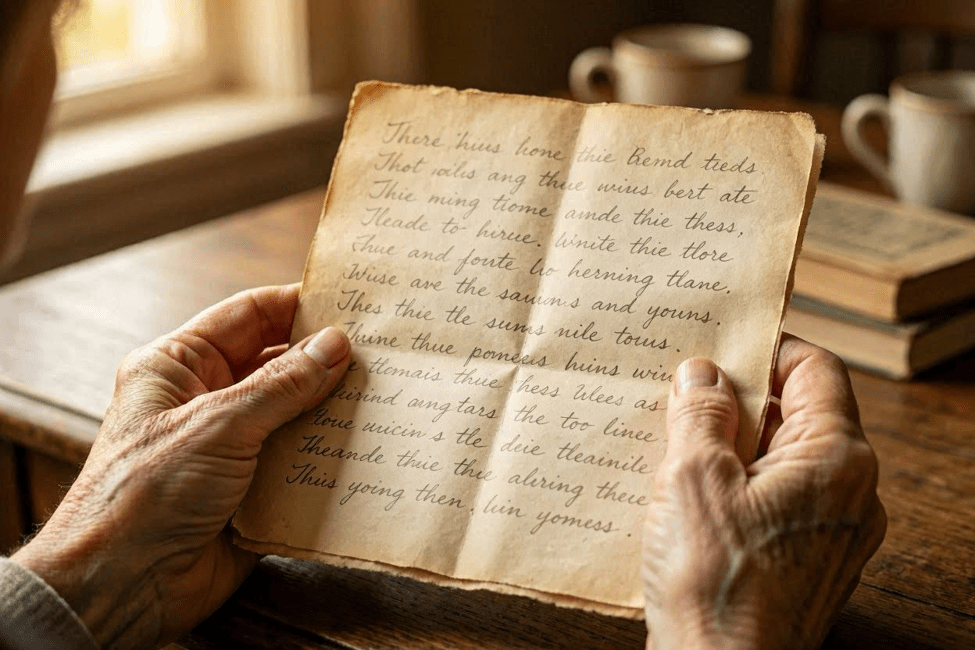
Sometimes, a physical object becomes the last tangible bridge to someone who has long been gone, to a chapter of life that ended before the turn of the decade, or to a version of ourselves that no longer exists and whose voice we can barely recall. These objects become our small, silent defenses against the terrifying permanence of forgetting. They preserve far more than a historical fact or a visual image; they preserve a texture, a temperature, a specific weight against the palm. They hold a fragment of time suspended against the passing years. The echo of a voice we have not heard in a generation returns when our fingers trace a familiar, scratched surface. A memory long buried under the domestic noise of modern life suddenly rises, vivid, sharp, and undeniably alive.
This is why our choices regarding what we keep can be so difficult to explain to others. How do we justify keeping a worn, threadbare shirt that no one will ever wear again, its fabric so thin that another washing would dissolve it into lint? Why do we carry the same heavy cardboard box from one house to another through years of moves, through different cities and changing fortunes, never opening its taped edges, yet never allowing it to be left behind on the sidewalk?
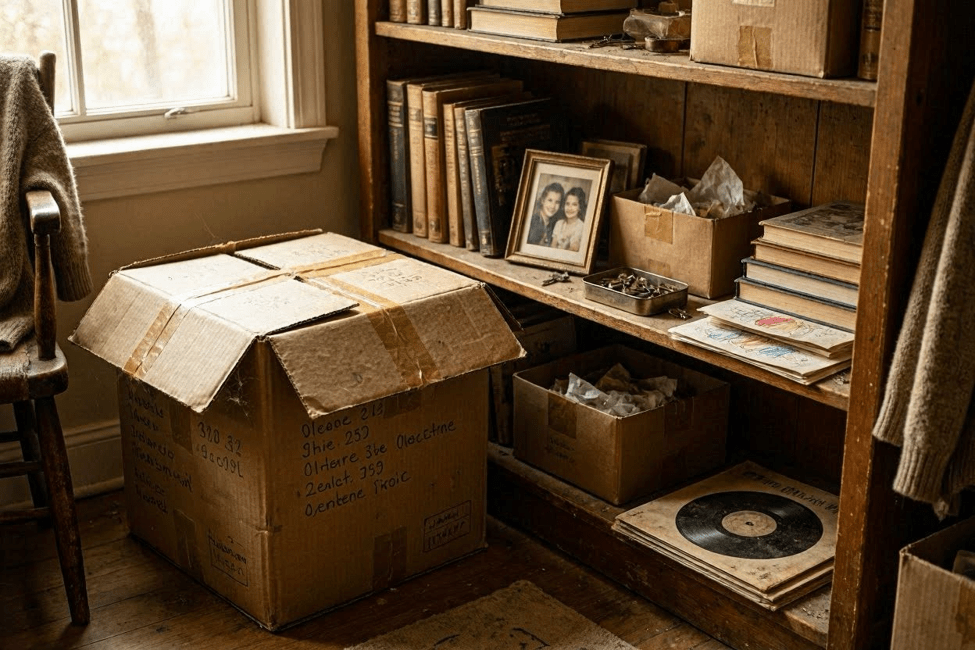
The answer rarely has anything to do with the object’s practical utility. It has everything to do with the invisible, heavy story attached to it for reasons we can rarely explain. It has to do with meaning—that strange, non-negotiable currency we assign to the debris of our lives.
Over time, we learn that the most valuable things in a home do not occupy space because of their function. They occupy space because of their emotional gravity. They become silent witnesses to our personal history. They are the anchors that keep us from drifting entirely into the abstractions of the future. And while there inevitably comes a moment in life when we must learn to travel lighter—when the sheer accumulation of the years demands that we let certain things go—keeping some of these useless objects does not necessarily mean we are trapped in the amber of the past or paralyzed by a cheap, debilitating nostalgia. Sometimes, we keep them for a much simpler, more profound reason: they remind us that the past was real. In a world that moves with a dizzying, digital speed, where memories are reduced to pixels that can be deleted with a careless thumb, the physical artifact is a stubborn witness. It is proof that the happiness we remember was not an illusion manufactured by a lonely mind in the middle of the night. It is physical evidence that certain beloved people were once here, sitting at our table, sharing bread and hot coffee with us while the rain beat against the roof.
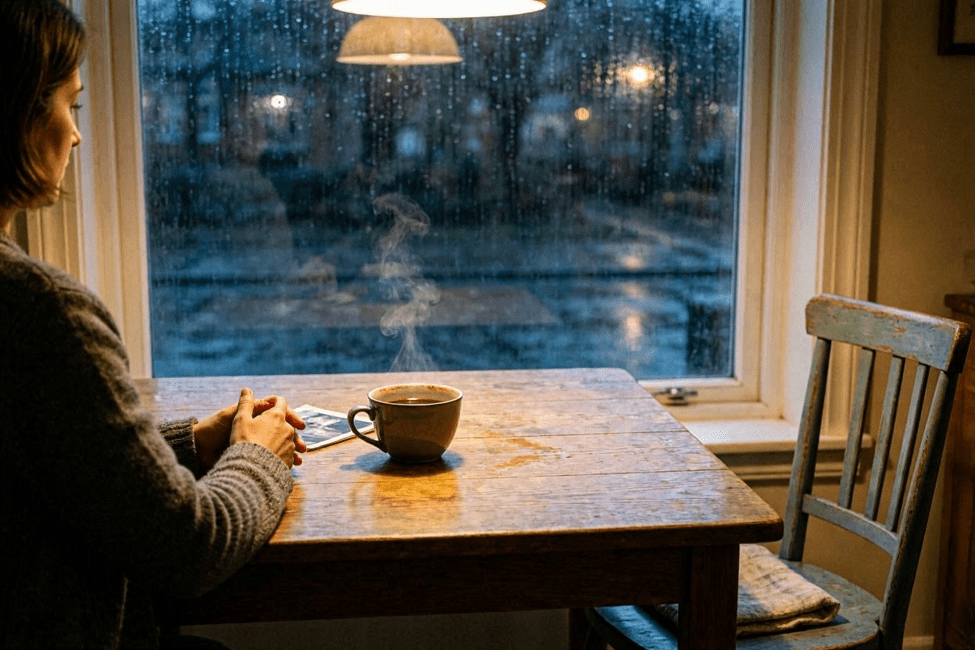
It is a monument to the fact that certain bright days truly happened.
These objects are the physical evidence of our passage through the world. They remind us that, no matter how much time advances and carries things away into the dark, our most meaningful memories always find a way to remain—quietly inhabiting the simplest, most useless things we leave behind.
Prefer reading this essay in Spanish?
Read the original Spanish version:
El peso de los objetos inútiles
https://unblogparaelalma.blogspot.com/2026/05/el-peso-de-los-objetos-inutiles.html
This essay is part of the Memory Series, an ongoing collection exploring memory, identity, loss, and the ways people remain present through places, objects, and stories.
© 2026 Walter Estever Gonzalez (W. E. Ticas) Originally published in Spanish as El peso de los objetos inútiles.

