La Novia de Las Piletas — W. E. Ticas (2026) Nine-track instrumental concept album.
A bus plunging into a ravine. A young university student who never came home. A tragedy remembered by a six-year-old boy.
When I was growing up in San Jorge, El Salvador, I remember adults talking about a terrible bus accident. I was too young to understand everything that had happened, and decades later I no longer remember the young woman’s name. What remained were fragments: a university student, a bus, a driver who lost control, a ravine, and a life cut short.
Years later, those fragments became the seed of another story. A young woman named Miriam emerged from them, along with Ricardo, the man who loved her; a wedding dress waiting in the city; a house they dreamed of building; and a narrator who would one day climb Las Piletas searching for the man he calls his uncle.
Memory gave me the fragments. Storytelling filled the space between them. The landscape, however, needed no invention. Las Piletas was already there.
Those elements eventually became La Novia de Las Piletas, my nine-track instrumental concept album, released on September 25, 2026.
To give the story two different forms, I created both a narrative video for my YouTube channel and a full instrumental album. The video tells the story through the memories of its narrator, while the album takes a different path: it becomes the emotional soundtrack to Miriam and Ricardo’s story, moving through love, loss, grief, memory, folklore, and the landscape that carries them all.
Watch the Story Behind the Music
The narrative video tells the story through the eyes of someone who remembers Miriam from childhood and knows Ricardo as his uncle. Through his memories, the tragedy becomes intimate—not simply a story about a young woman who died, but about the people who had to continue living after she was gone.
The video is narrated in Spanish, with English subtitles available. Watch the full story below before—or while—exploring the music it eventually inspired:
Watch the full video above to hear the original Spanish-language narration, with English subtitles, and immerse yourself in the atmosphere of Cerro Las Piletas. Subscribe to the channel for more Salvadoran storytelling and folklore.
The Landscape: San Jorge and Las Piletas
Las Piletas is a real place.
The hill lies about one kilometer from the center of San Jorge, El Salvador, the town where I was born. It is the closest hill to the center of town and one I walked countless times growing up. Its paths, vegetation, mango trees, hills, and winds belonged to my world long before Miriam and Ricardo belonged to theirs.
That distinction matters to me. The story may have grown over time, but its landscape came from memory. Las Piletas is not simply scenery chosen to make a story feel Salvadoran; it is part of the landscape of my childhood. And in La Novia de Las Piletas, it gradually becomes something more than a setting.
It remembers. It whispers. It waits.
Track-by-Track: A Narrative in Nine Compositions
La Novia de Las Piletas is completely instrumental. There are no lyrics explaining what happened to Miriam or telling the listener what Ricardo feels. Instead, the nine compositions use atmosphere, titles, recurring images, and sound to carry the story forward. Each track becomes another chapter:
El Vestido Que Nunca Llegó — The Wedding Dress That Never Arrived
Miriam is preparing to marry Ricardo. Her wedding dress is waiting for her in the city. She leaves on a Tuesday to collect it, and by Saturday, she is supposed to marry the man she loves. She never comes home. In the story, the bus is caught in the violence surrounding the Salvadoran conflict; the driver desperately tries to escape, loses control, and the vehicle plunges into a ravine. Miriam is among the dead. The wedding dress becomes part of the wreckage—a stark image of a future that will never arrive.
Duelo — Mourning
After the violence comes silence. Ricardo is never the same. He does not speak about what happened, nor does he seek another woman. The man who had imagined an entire life beside Miriam now has to live in the absence of that life. The story describes his grief as something almost invisible: muted sobs in the loneliness of his home, an empty gaze, a man who seems to have lost part of himself with her. Duelo inhabits that silence. Grief does not always announce itself loudly; sometimes it simply occupies the place where a future was supposed to be.
La Casa Que Soñamos — The House We Dreamed Of
There was supposed to be a house. Before Miriam’s death, she and Ricardo had imagined the life they would build together. The house represents much more than walls and a roof—it represents the invisible losses: the home that will never be completed, the children who will never be born, the conversations that will never happen, and two people who will never have the chance to grow old together. La Casa Que Soñamos belongs to those losses that exist because we know what should have been there.
Viento Entre los Mangos — Wind Among the Mango Trees
The mango trees become silent witnesses. People arrive and leave, promises are made, lives change, and generations pass—but the trees remain. Throughout La Novia de Las Piletas, the mango trees stand beside love, grief, waiting, memory, and eventually death. The wind moves through them as time moves through the story. And sometimes, when everything else has become quiet, the landscape seems to remember for us.
Donde Ella Todavía Espera — Where She Still Waits
Years pass. Ricardo grows older, but Miriam does not. In his memory, she remains the young woman who was supposed to become his wife. Ricardo increasingly wanders the hills with his cattle, and people begin to say they have seen him sitting beneath trees, speaking as though someone were there beside him. Perhaps he is speaking to a memory, perhaps grief has made Miriam more present to him than the living, or perhaps Las Piletas has kept something that was never ready to leave. Donde Ella Todavía Espera offers no answer. It simply waits.
El Torogoz Me Llamó — The Torogoz Called Me
The torogoz is El Salvador’s national bird. Within the album, its call becomes a symbol of memory, homeland, and the strange pull of a place that continues calling long after one has left it. When Ricardo disappears into the hills, the narrator climbs Las Piletas searching for the man he knows as his uncle. The trail is damp, the air feels heavy, and the silence becomes almost uncomfortable. Then he hears a whisper, followed by the unmistakable call of the torogoz—loud and clear, guiding him farther into the hill. The torogoz does not explain anything; it simply calls, and the narrator follows.
Susurros en Las Piletas — Whispers in Las Piletas
By now, grief and folklore occupy the same space. The narrator hears something in the wind—a whisper, a name he cannot quite understand. Perhaps it is nothing more than the landscape playing tricks on someone who has spent too much time searching. Perhaps memory makes us hear what we expect to hear. Or perhaps some places hold onto people longer than they should. Susurros en Las Piletas exists in the space between those possibilities. By this point, the hill has become a character of its own.
Ella Volvió por Él — She Came Back for Him
Eventually, the search ends beneath a mango tree. Ricardo is resting against its trunk, his hands relaxed, his eyes closed, with no signs of struggle. And on his face is something unexpected: a smile. The story describes it as the same kind of smile people remembered when they spoke of Miriam—a smile that could brighten even the darkest days. There are many ways to understand that smile, and the eighth composition offers mine: Ella Volvió por Él. She came back for him.
La Sonrisa de Ricardo — Ricardo’s Smile
The album does not end with the bus in the ravine, nor does it end with Miriam’s death. It ends with Ricardo’s smile. That distinction matters. The final composition returns to the mango tree, to stillness, and to a man who has carried an absence for years. The tragedy at the beginning destroyed the future Miriam and Ricardo had imagined, and nothing can give them that future back. But beneath that mango tree, the waiting has ended. Whether Miriam returned, whether Ricardo finally found peace, or whether the answer belongs only to Las Piletas is left to the listener. The final image remains: Ricardo is smiling.
Nine Compositions, One Story
Together, the nine pieces form a single narrative without words: the wedding dress, the house that was never built, the mango trees, the wind, the torogoz, the whispers, the waiting, and finally, Ricardo’s smile.
Behind all of them remains that much older memory. I still cannot tell you the name of the young university student whose death people were discussing when I was about six years old. I cannot tell you her story because I never knew it. What survived were fragments: a young student, a bus, a ravine, and a life ending far too soon.
I carried those fragments without knowing that one day they would become something else. Around them eventually grew Miriam and Ricardo, a wedding dress, an unfinished house, a torogoz calling from the hill, mango trees holding years of silence, and a bride who may still be waiting somewhere in Las Piletas.
Memory gave me the beginning. Storytelling carried it somewhere else. And music gave it a voice without words.
Listen to La Novia de Las Piletas
La Novia de Las Piletas was released on September 25, 2026, under the artist name W. E. Ticas, and is available across major music streaming platforms.
Some landscapes stay inside us long after we stop walking their paths. Las Piletas is one of those places for me. Decades after a childhood memory first planted the seed of this story, its hills, mango trees, whispers, and ghosts have found another way to speak—this time, through music.
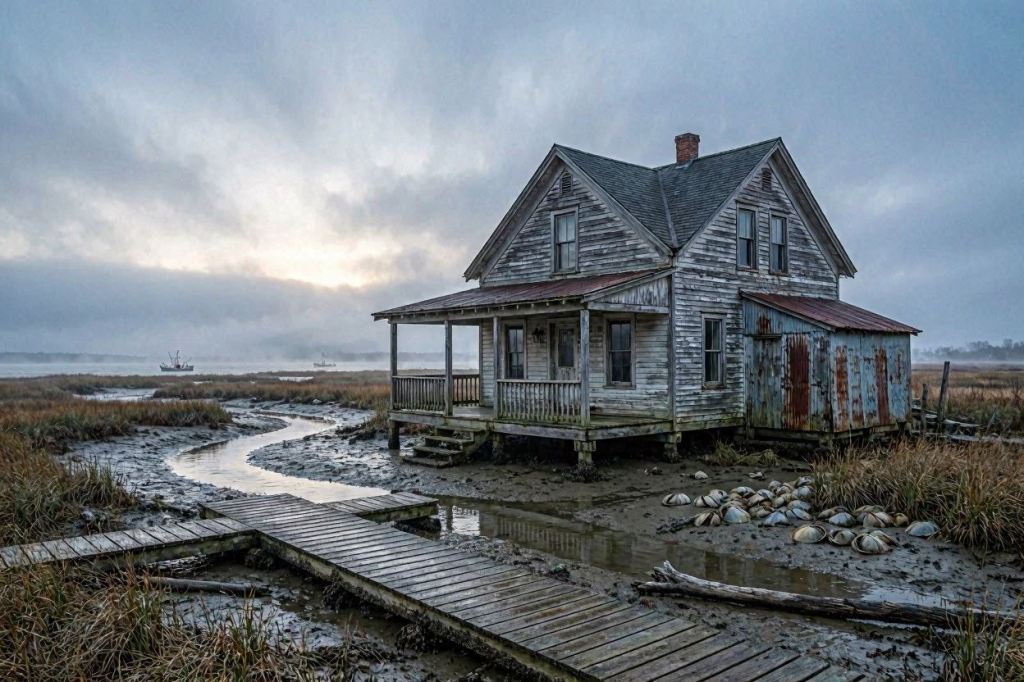
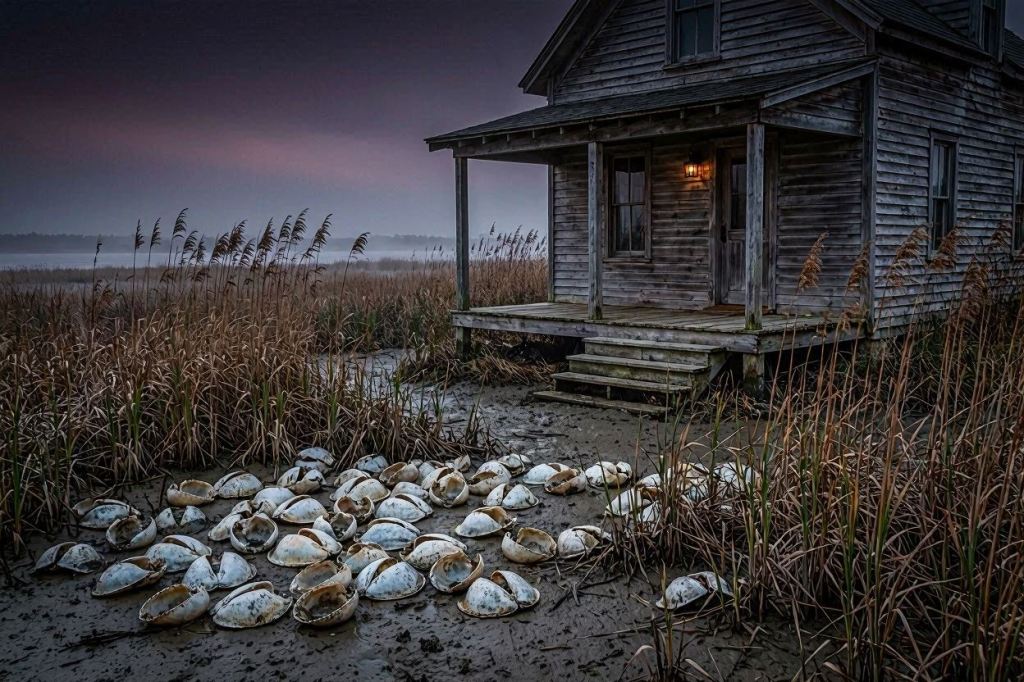
The house sat on an unnumbered plot near Coecles Harbor, where the salt marsh crept into the yard every third spring, leaving behind black thatch and the hollowed carapaces of horseshoe crabs. It was an old structure, framed in saltbox timber that had gone the color of a wet slate shingle, balanced on dry-stacked fieldstone. When the wind came off the Gardiners Bay, the floorboards in the kitchen rose a millimeter, breathing with the tide.
We had moved there because of the silence, or what we mistook for it. On Shelter Island, quiet is not an absence of sound but a pressure—the rhythmic thrum of the North Ferry crossing between Greenport and Shelter Island, the click of gravel under the tires of summer residents who stayed too late into October, the dry rattle of scrub oak against the gutters. After midnight, when the boats stopped running, the island seemed to lift free of the mainland altogether, three thousand souls suspended between the twin forks of Long Island like an unuttered thought.
Some places wait longer than memory.
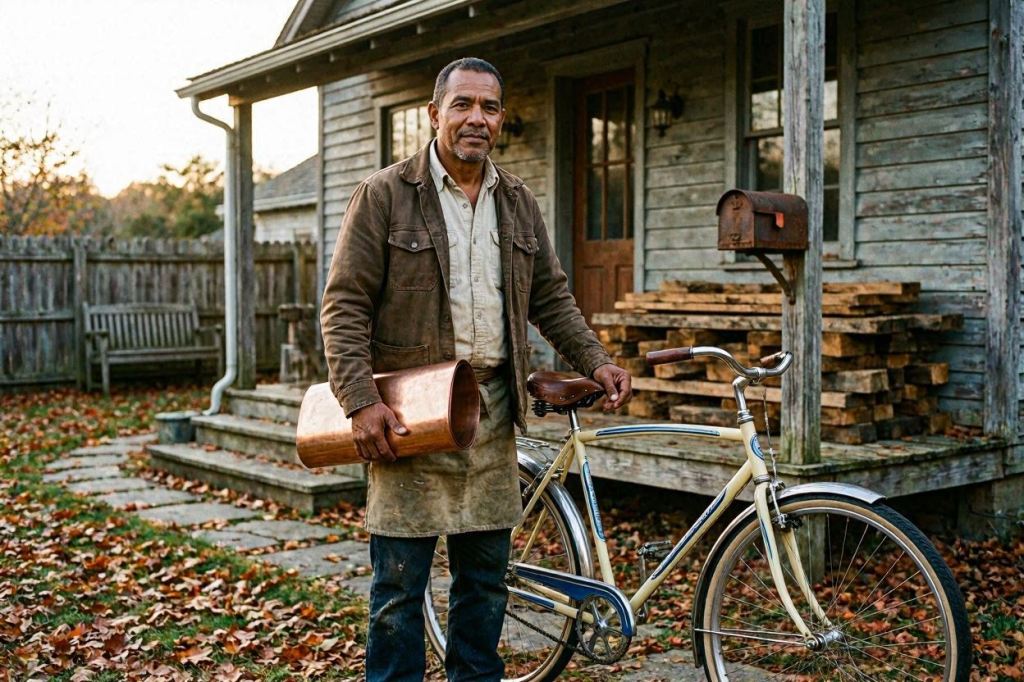
“We don’t need a car,” Julián had said that first June, his voice carrying that low, rhythmic Salvadoran cadence that six years in New York had flattened but never entirely erased. He was standing on the porch, a roll of copper flashing under his arm. “Everything here is within walking distance if you aren’t in a hurry. And if you are in a hurry, you shouldn’t be living on an island.”
He had an old steel-framed Raleigh bicycle he’d found under the crawlspace, its chain rusted into a stiff, brown snake. He spent three evenings in the shed with a can of kerosene and an old toothbrush, freeing the links one by one until they turned with a dry, metallic hiss. That was his way. He did not believe in sudden movements. He believed in friction, in the gradual wearing down of resistance through repetition. When he spoke to the local contractors or the men at the hardware store by the center, his English was precise, slightly formal, delivered with a soft, breathy pues that sometimes slipped between his sentences like a small wedge holding open a door.
Some guardians never leave their post.
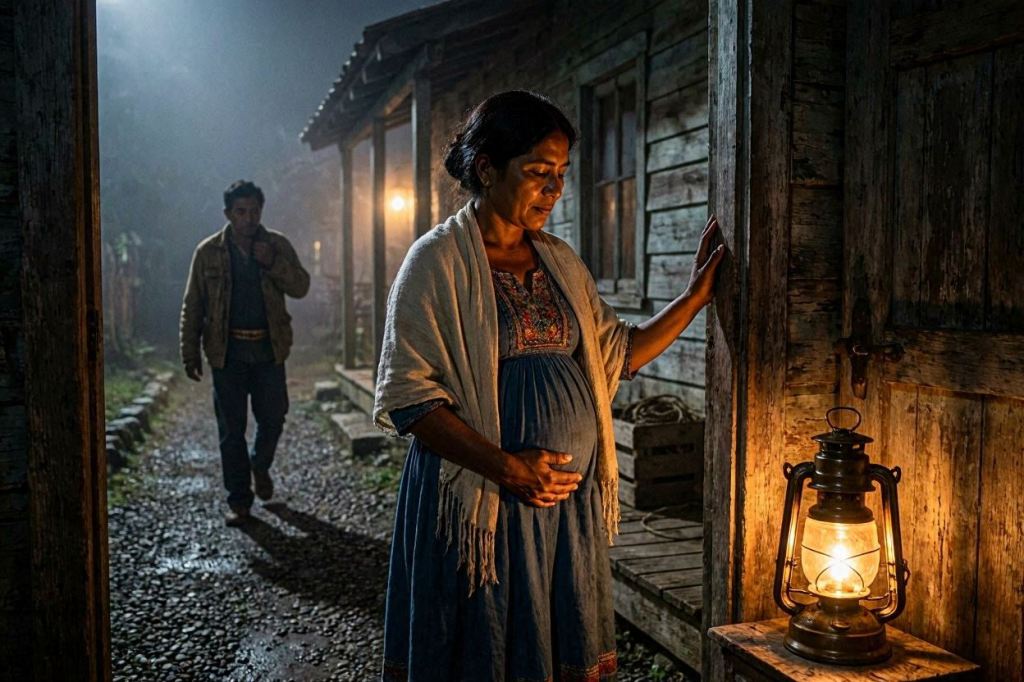
By November, the summer people had boarded up their shingled cottages on Ram Island, leaving their kayaks turned belly-up on the grass like dead fish. The island became small again, intimate and slightly menacing. The air smelled of woodsmoke and rotting kelp. My belly had grown high and hard, a tight drum that made it difficult to sit at the kitchen table for long without a cushion behind my lower back.
The contractions began shortly after twilight.
It was a Tuesday. The sky had turned the color of a bruised plum before dissolving into a thick, wet fog that smelled of the fish docks. I was standing by the stove, watching a pot of lentils turn over in the gray water, when the first one took me. It wasn’t the sharp, clean pain the manuals had promised—the neat, wave-like diagrams they showed us in the clinic over in Riverhead. It was an old, dull ache that started in the small of my back, right where the spine meets the pelvis, and stayed there, heavy and cold, like a wet stone dropped into a well.
“Let me see,” Julián said, coming up behind me. His hands were cold from the shed; he had been sharpening an axe on the oilstone. He placed his palms against my hips, his thumbs searching for the notch in the bone. “Is it regular?”
“No,” I said, leaning my forehead against the cool stainless steel of the range hood. “Just a pressure. Like the house settling.”
“We have time,” he murmured. His chin brushed my shoulder. He smelled of three-in-one oil and damp wool. “The ferry doesn’t stop for four hours. We can take the ten o’clock. It’s fine, mi amor. The doctor said first babies take days. They like the dark. They don’t like to come out into the cold.”
But his voice lacked its usual weight. He was looking out the small window above the sink, where the reflection of the kerosene lamp hung over the dark yard like a false moon. Outside, the fog was coming in fast, swallowing the cedar trees one by one. By the time the last tree vanished, the glass showed only our faces, pale and trapped inside the kitchen.
By eight, the space between the dull aches had begun to shrink, though they remained formless. They didn’t have edges. They were large, blunt shapes that occupied the whole room, crowding out the air until I had to open my mouth wide to find enough oxygen to satisfy my lungs.
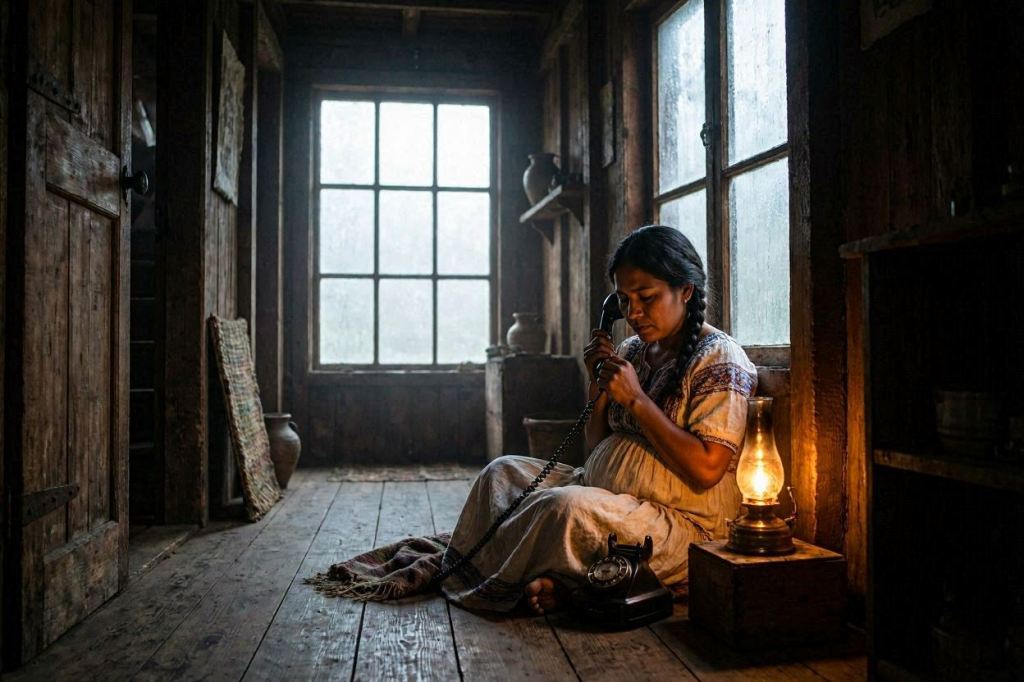
Julián was walking from the kitchen to the small hallway where the telephone sat on a wicker stand. The house didn’t have reliable copper wiring; the line had been strung across the marsh twenty years ago by an independent contractor who had since died, and whenever the salt air got into the junction box on the pole by the road, the dial tone grew faint, accompanied by a dry, rhythmic clicking—like a grasshopper trapped inside the plastic housing.
“The signal is down again,” he said. He wasn’t loud. He never shouted. But his fingers were twisting the cord around his wrist until the skin turned white. “It’s the fog. It holds the damp against the wires.”
“Try the mobile,” I said from the bed. I had moved there twenty minutes earlier, finding the wooden chair too hard, too uncompromising against my tailbone.
“Nothing,” he said, looking down at the small black screen. “One bar, then none. It’s searching. It’s always searching.”
The hospital was Eastern Long Island Hospital, across Shelter Island Sound in Greenport. To get there, you had to drive north to the ferry slip at Derring Harbor, wait for the Captain Lawrence or the Governor Clinton, cross the half-mile of deep, tidal channel where the currents from the Peconic met the open bay, and then drive another six blocks up Front Street. It was an easy trip at noon on a clear July day, full of seagulls and the smell of diesel and the sight of teenagers eating soft-serve ice cream on the upper deck. At nine o’clock on a foggy November night without a car, it might as well have been on the other side of the moon.
“I’m going to Harry’s,” Julián said. He had put on his oiled canvas jacket, the heavy one with the corduroy collar that smelled of salt and old tallow.
Harry was our neighbor to the west, a retired tugboat captain who lived three hundred yards down the gravel path, past the blueberry thicket. He had a four-wheel-drive Ford with a snowplow frame on the front and a twenty-six-foot Boston Whaler tied to his private dock. He was a sour man who lived alone with a deaf retriever, but he kept his engines clean.
“Don’t leave,” I said. The word came out smaller than I intended, caught in the teeth of another long, slow tightening that seemed to drag my ribs down toward my knees.
“I’ll be ten minutes,” he said, kneeling by the side of the bed. He took my hand. His palms were rough, the skin calloused from the carpentry work he’d been doing for the summer estates on Shelter Island Heights. “Ten minutes, Liliana. Harry will bring the truck around. We’ll drive down to the ferry. Even if the regular run is done, the captain lives by the dock. Harry knows him. They’ll turn the engines over for an emergency. They have to.”
“The wind is coming up,” I said, listening to the loose pane in the bedroom window. It was a high, thin whistle, like a wire being drawn through a keyhole.
“It’s just the fog moving,” he said. He kissed my forehead. His lips were dry. “Respirá. Like we did in the library. Count to four. Hold it. Then let it go.”
I heard the heavy latch of the kitchen door drop into its keeper. Then his boots on the gravel—crunch, crunch, crunch—each step distinct, each step taking him farther from the lamp. After the seventh, the sound changed. It did not fade. It stopped. I waited for the eighth.
The tide always comes back.
Then there was only the house.
On Shelter Island, when the human noises stop, the insects take over the register. Even in late autumn, there is a small, frantic cricket that lives under the foundation, its song slowed down by the cold into a heavy, mechanical click. Chirp. Chirp. Chirp. It sounded like a clock whose spring had been overwound.
I lay on my side, my knees tucked toward my chest, trying to find the rhythm Julián had promised me. But the room had gone strange. The lamplight no longer reached the corners; it gathered in a small yellow knot around the wicker table, while the pine dresser, the broken rocking chair, and the dark framed print of The Portland withdrew into a grayness that felt deliberate.
The third hour was the longest.
The telephone did not ring, but every few minutes it gave a short, half-hearted ting, the bell inside hitting the clapper without completing the stroke. I managed to roll off the mattress and crawl to the hall, my palms flat against the cold grain of the fir flooring. The wood felt damp, as if the fog had found its way through the sills.
I picked up the receiver. The line wasn’t dead, but it wasn’t right. There was no dial tone, only a dry, rushing sound, like water flowing through a rusty pipe deep underground.
“Hello?” I said. My voice sounded flat, without echo. “Is anyone there?”
A voice came through the static—not a person’s voice, but a recorded fragment, thin and metallic, like an old weather broadcast from thirty years ago. …northwest winds fifteen to twenty knots… visibility near zero in heavy fog… vessels should remain in harbor… Then it clicked, and the rushing sound returned, louder this time, accompanied by a faint, rhythmic thrumming that sounded exactly like a ferry idling in the dark.
I dialed the three digits for emergency.
The connection took an immensely long time to clear. When it finally went through, the ringing was different—two short rings and a long pause, a pattern they hadn’t used on the island since the sixties.
“Emergency,” a woman said. Her voice was very loud, then very faint, as if she were speaking into a tube from another room. “State your location.”
“Coecles Harbor,” I said, my breath catching as another contraction flattened me against the baseboard. “Near the old creek road. The house with the green door. My husband went for the neighbor, but he’s not back. The baby is coming.”
“We have a report of a blockage,” she said.
“A blockage?”
“The ferry isn’t running, ma’am. The visibility is less than ten feet in the channel. The Coast Guard has suspended small craft movement between Greenport and Shelter Island. Is there someone with you?”
“No,” I said. “He went to Harry’s. Ten minutes ago. Or an hour. I don’t know.”
“Stay where you are,” she said. Her voice began to drift again, caught in a wave of static that sounded like dry leaves scraping across asphalt. “Do not… attempt the crossing… the water is not… the Watcher is awake…”
“What?” I shouted into the black plastic mouthpiece. “What did you say?”
“…keep warm,” she said, her voice clear for one final, sharp second. “We will dispatch the crew as soon as the sun clears the tree line. Do not push.” The line went dead with a hard, metallic snap, the kind of sound a fuse makes when it blows under a heavy load.
Some journeys begin long before anyone knows.
I lay on the hallway floor for a long time, the wood cool against my cheek. The pain had changed. It was no longer an ache; it was a command. Something heavy and iron was being driven between my hips, and each time it came, the house seemed to grow larger around me. The ceiling lifted. The rafters disappeared. The lamp shrank to a pin of yellow fire.
I called his name. “Julián.”
The house took the word and held it. There was no echo. On Shelter Island, the walls are often stuffed with old newspaper or dried eelgrass for insulation, and when the air gets damp, they swallow sound like cotton wool.
I listened for his boots on the gravel. I listened for Harry’s Ford truck—that old diesel V8 that rumbled so loud it used to rattle the teacups in our cupboard whenever he started it up to go deer hunting at dawn.
Nothing came. No headlight beams swept across the wallpaper. No dog barked.
The silence was not empty. It had weight. It pressed against my ears, against my teeth, against the door where Julián should have been knocking.
The delivery belongs to the dark.
I will not describe the mechanics of it—the tearing of the skin, the wet, iron smell of the blood that soaked through the green towel I had dragged from the bathroom, the way the body becomes an engine separate from the mind, working its levers without permission. That part is common. Every woman who has ever sat on a stone floor or a clean hospital sheet knows that shape.
What was not common was the lack of witness.
When the head finally came—a hard, round stone that seemed too large for the world—the room ceased to be a room. It became a clearing, a shelf of rock in the middle of the bay, a place with no walls to hold a scream. I screamed anyway, and the sound went out into the fog and did not return.
The child came out before the birds started. He did not cry. He lay between my thighs, small and dark and slippery, as still as something the tide had left behind.
I cleared his mouth with my finger. My hand shook so hard my fingernails clicked together. For one terrible second there was nothing. Then his chest rose under the gray coat of grease, and he gave a small, thin cry—not the loud, angry wail from the films, but a dry, whistling sound, like a sandpiper caught in the reeds.
I lifted him onto my chest. He was very hot, his skin like an oven compared to the cold air of the house. I took the blue wool blanket from the foot of the bed and pulled it over both of us, tucking his small, wet head under my chin. “You’re here,” I whispered.
Every beginning asks something of the world.
The baby’s heart was beating against my ribs—two hundred strokes a minute, a frantic, tiny hammer trying to break through its cage.
We lay there while the window slowly turned from black to a greasy, wet gray. The fog did not lift with the sun; it simply became bright. Every object in the bedroom appeared with cruel precision—the oil lamp burned down to its wick, the dark stain spreading on the pine floor, the brass buckle on my old shoe by the closet. Morning had arrived, but rescue had not.
The paramedics arrived near noon.
I heard the ferry whistle first—that three-long-blasts signal that means the boat is coming into the slip after an interruption. Twenty minutes later, the red truck from the volunteer ambulance corps came down the path, its tires crunching on the gravel with a sound that seemed shockingly loud, almost violent, after the twelve hours of quiet.
They came through the door without knocking—two men from the center, men I’d seen at the post office, their orange jackets bright as pumpkins in the kitchen.
“Liliana?” one of them called out. His name was Miller. He owned the plumbing supply store. “We got a call from the mainland. You okay?”
They found me in the hallway, still sitting against the baseboard with the baby wrapped in the blue wool blanket. They were efficient, their hands big and red and smelling of coffee and tobacco. They cut the cord with a pair of sterile scissors they took from a silver paper pouch, clapped an oxygen mask over my face—the rubber smelled intensely of mint—and wrapped the child in a silver foil sheet that crackled like dry corn husks.
“Where’s Julián?” Miller asked, looking around the empty kitchen. The pot of lentils was still sitting on the stove, the water gone cold and white. “He should’ve been down at the dock waiting for us.”
“He went to Harry’s,” I said. The words felt thick in my mouth, like I was chewing on wool. “Last night. Before the ferry stopped.”
Miller looked at the other man, a younger guy named Corwin who worked for the highway department.
“Harry’s?” Miller said. “Harry’s been in New London since Sunday. His sister’s sick. I fed his retriever this morning myself.”
I took the oxygen mask off my face. “His truck was there. The Whaler was at the dock.”
“No,” Miller said, his voice dropping into that careful tone people use before bad news becomes official. “The truck’s in his driveway, yes. But the keys are on his kitchen table. The house was locked from the outside.”
The investigation lasted three weeks and produced forty-two pages of typed reports, which were later collected into the gray cardboard binder marked Case 007 (Shelter Island).
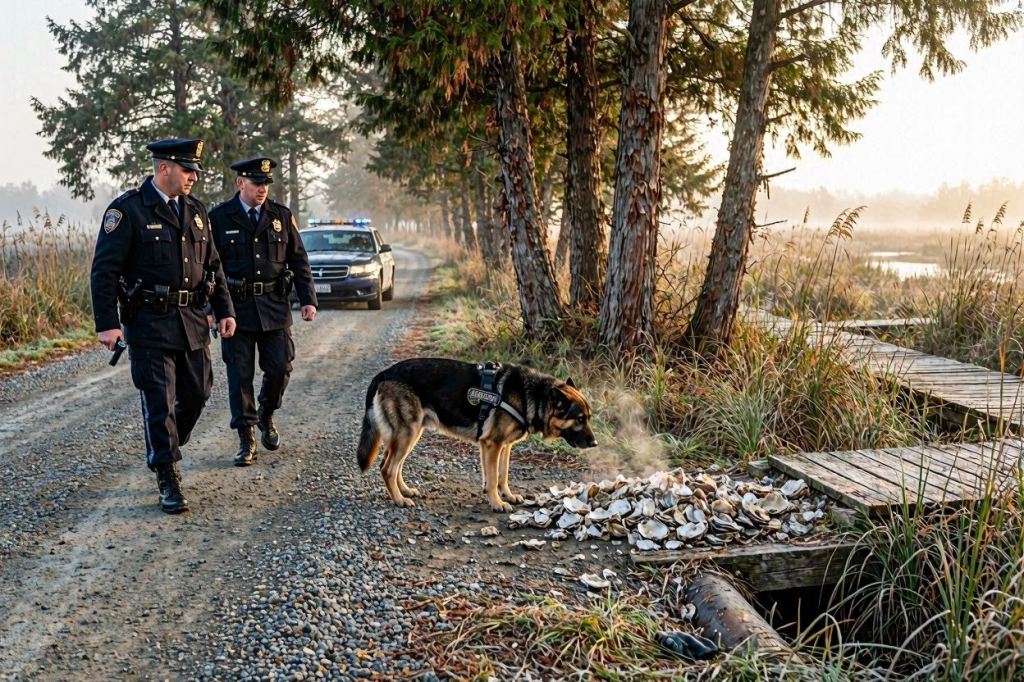
The state troopers brought a dog down from Riverhead—a big, lean German Shepherd with notched ears and a permanent snarl. They started him at our kitchen door. He took the scent from one of Julián’s old flannel shirts, the blue one he wore for painting, and followed it down the gravel path toward the blueberry thicket.
I watched them from the porch, holding the baby against my shoulder. The sun was out then, bright and cold, turning the salt marsh into a field of yellow needles.
The dog ran well for the first fifty yards, nose tucked into the gravel, tail low and straight. Then, where the path bends around the old drainage ditch and the crushed oyster shells whiten the ground, he stopped.
The handler tugged the lead. The dog would not move. He stared at a small patch of weeds between two cedar trees and began to tremble. “Nothing,” the trooper said, coming back up the path. He looked at me with a strange expression—not suspicion, exactly, but the sort of blankness you see in town clerks when you ask for a document that was lost in the courthouse fire of forty-eight. “The scent just ends. Like he jumped into a boat.”
Not every trail leads where it should.
“There was no boat,” I said. “The Whaler was tied to Harry’s dock. The troopers checked the lines. They were covered in the same green slime that’s been growing there all autumn. They hadn’t been cast off.”
The cameras at the North Ferry slip showed nothing either. I went down to the office the following Monday to see the footage myself. The terminal manager, an old man named Dickerson who had known my father-in-law, sat me down in front of a small gray monitor that smelled of ozone.
The tape was black and white, grainy from the salt fog that had coated the lens. It showed the empty slip at 7:40 p.m. The water was flat as oil, the reflection of the sodium lamp on the pier forming a long, white streak across the dark. At 7:42 p.m., the screen went white for three seconds—a sudden burst of static that Dickerson said was caused by a lightning strike over Orient Point, though the weather log showed no thunder that night.
When the picture returned at 7:45 p.m., the slip was exactly the same. The water hadn’t moved. The reflection of the lamp was still there.
“But look here,” Dickerson said, pointing his yellow thumb at the bottom corner of the screen.
On the gravel path that led to the old, abandoned steamboat wharf—a pier that hadn’t been used since the steamers stopped carrying potatoes to Manhattan in the twenties—there was a small object. It hadn’t been there at 7:40.
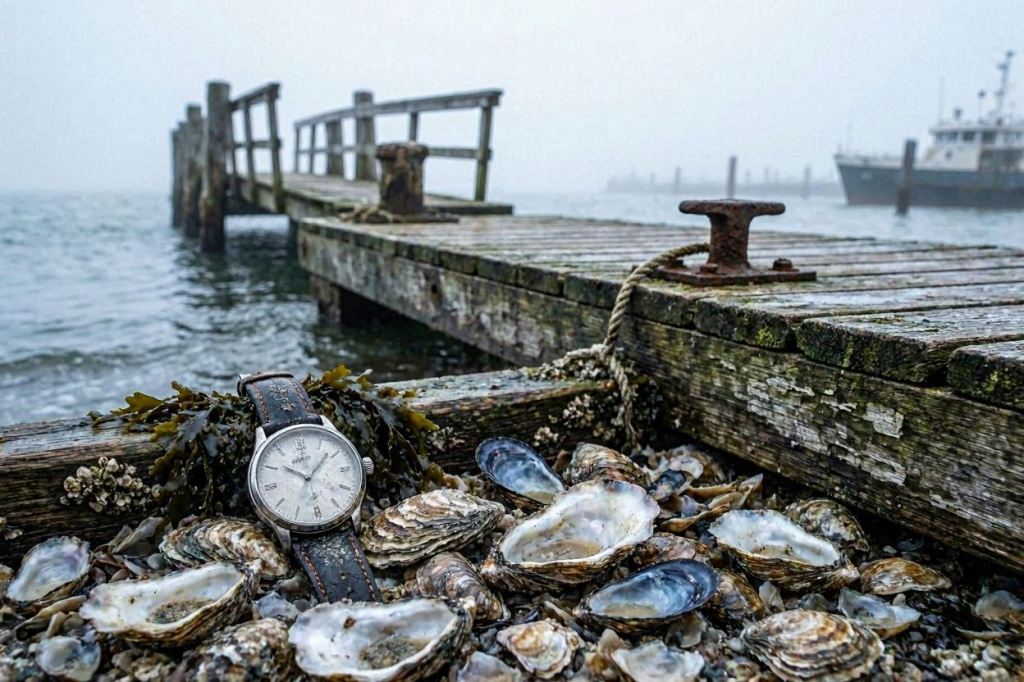
The troopers went down and picked it up an hour later. It was Julián’s watch. It was an old Seiko automatic his uncle had given him for his fifteenth birthday in San Miguel. It didn’t have a battery; it ran on the movement of the wrist, a small lead weight inside turning with every gesture of the hand, winding the spring by the mere fact of living.
The crystal was unbroken. The stainless steel band was unbuckled and laid straight on the stones like a dead eel. The hands had stopped at 7:42.
Time remembers what people cannot.
In the months that followed, the town stopped using his name. On Shelter Island, when a man disappears without a body, he doesn’t become a ghost; he becomes a legal definition. He becomes The Missing Spaniard or The Incident at Coecles Harbor. They talk about him the way they talk about the hurricane of thirty-eight—an event that happened to the geography rather than to the people.
I stayed in the house. My mother wrote to me from San Salvador, her letters full of exclamation points and quotes from the Book of Job, telling me to come home, that the north was a place of salt and death. But I couldn’t move. My legs felt heavy, as if the floorboards had finally succeeded in clamping onto my ankles.
The child grew. I named him Mateo. He had his father’s eyes—not the color, which was a pale, watery brown like my own, but the way they stayed still when someone entered the room, waiting for the person to settle before choosing to look at them.
It wasn’t until Mateo was five years old that the classification officer came.
He didn’t look like a bureaucrat from the county. He drove a dark blue sedan with no seals on the doors and no government plates, just a standard dealer frame from a garage in Queens. He wore a gray tweed overcoat that looked too warm for the weather, and he carried a narrow leather case that smelled of linseed oil.
He sat at my kitchen table, right where Julián used to sharpen his tools. He didn’t ask for coffee.
“We’re closing the log on Case 007,” he said. His voice had no regional accent; it was that flat, mid-Atlantic English you hear from radio announcers who have spent forty years in dark booths.
“Did you find something?” I asked, leaning against the sink with Mateo on my hip.
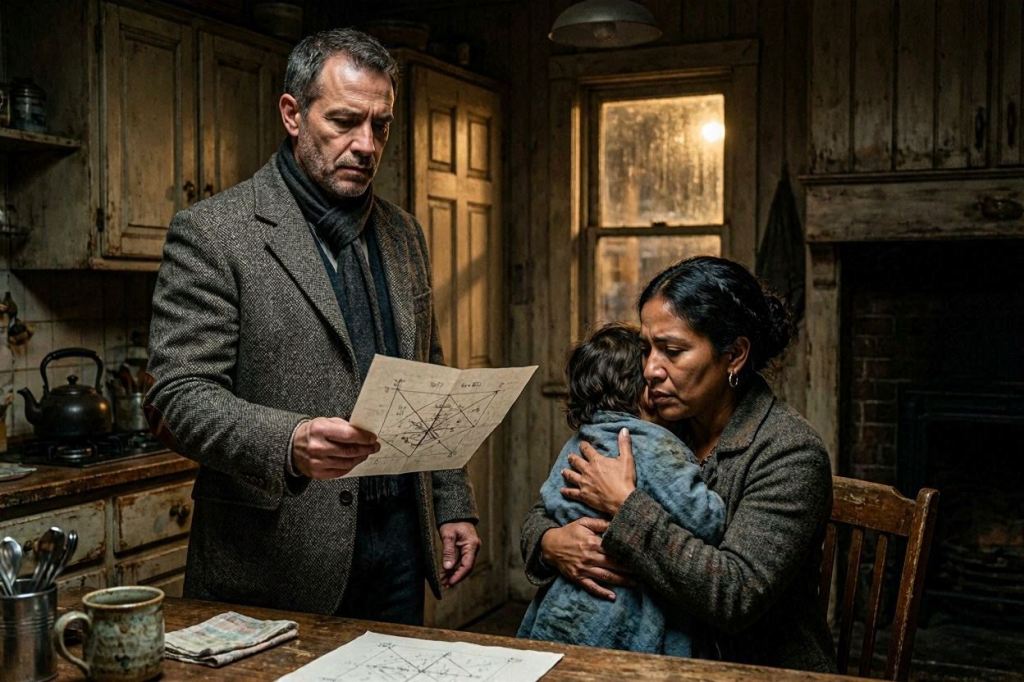
“No,” he said, opening the case. He took out a single sheet of heavy, unlined paper—not standard copy paper, but something thicker, like the parchment they use for deeds. “We don’t find things, Mrs. Menjívar. We verify the filing.”
He laid the paper on the wood. It wasn’t a report. It was a diagram—two lines drawn in black ink that started from a single point near the bottom of the page. The point was marked 7:42 p.m. One line went straight up, ending at the margin with a small, neat cross. The other line curved sharply to the left, running off the edge of the sheet entirely, its trajectory unfinished.
“He didn’t run away,” the officer said, his eyes remaining on the paper. “And he didn’t drown. If he had drowned, the tide would have left his boots in the reeds by Mashomack. The bay always returns the leather.”
“Then where is he?”
The search for answers begins where fear has already made its home.
“He’s in the archive,” he said. He looked up then, and his eyes were the color of the bay under heavy fog—neither gray nor white, only an absence of reflection. “During the night of the sixteenth, at the moment of greatest stress—the child in the passage, the line dead, the ferry suspended—the probability matrix for this sector thinned. Your husband existed in two equal trajectories for approximately one hundred and eighty seconds.”
He tapped the straight line with his finger.
“In one trajectory, he stays in the kitchen. He holds your hands. He delivers the child himself using the sewing shears and the cotton string from the pantry. The child survives, but the mother dies of a hemorrhage before the morning boat can clear. That version is currently active in another ledger.”
My hand tightened around Mateo’s thigh. The boy didn’t move; he was watching the officer’s silver pen with a strange, adult intensity.
“And the other line?” I asked.
“The other line is the one you’re sitting in,” the officer said, his voice dropping into a rhythmic drone that sounded exactly like the cricket under the floorboards. “He chose to run for help. He chose to break the circle. The moment his foot touched the oyster shells by the ditch, the system adjusted. The Watcher took the alternate trajectory to balance the ledger. A world cannot hold two versions of the same sacrifice.”
“Who is the Watcher?” I asked.
The officer didn’t answer. He stood up, buttoning his tweed coat with two fingers. He left the paper on the table.
“There is no compensation,” he said, reaching for his leather case. “The state doesn’t recognize archival filing as a death. You will continue to receive the tax assessments for the plot. If you wish to sell, you’ll need a signature from a man who has been gone for five years.”
Now, Mateo is five. He doesn’t ask about his father anymore, because on an island, everyone has someone who didn’t come back from the water. It’s a common condition, like the salt-rust on the hinges or the way the well water turns sulfurous in August.
But at night, when the wind comes off Gardiners Bay and the house begins to breathe, I feel the weight of the other line.
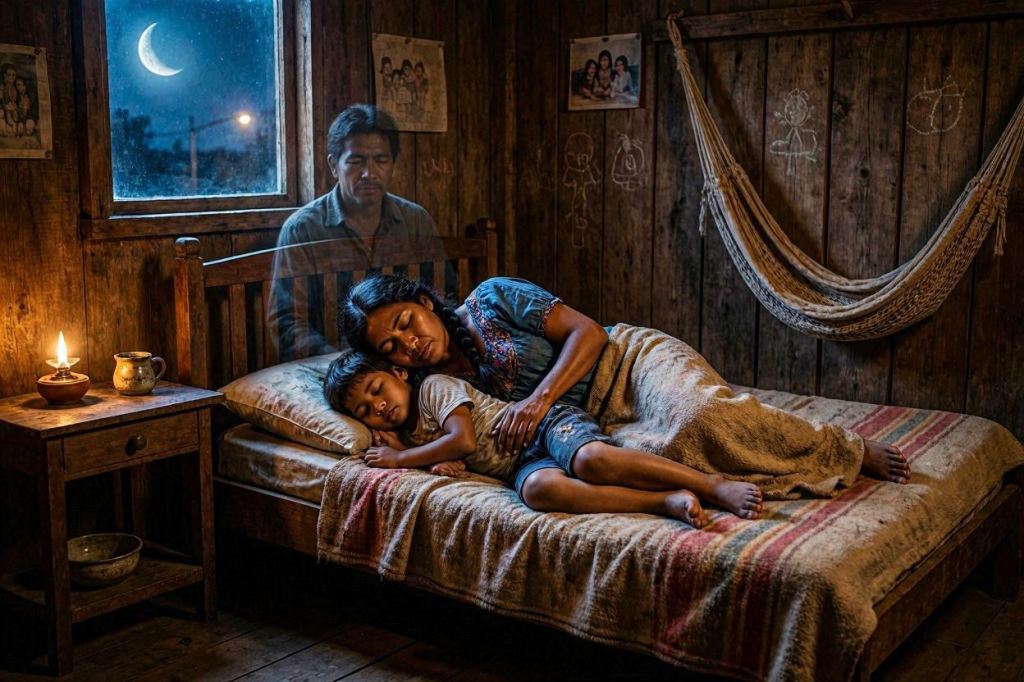
It always happens around three in the morning, during that hour when the body’s clock slows down to its lowest mark, just before the first fishing boats start their diesels down at the town dock. I’ll be lying in the dark, my arm flung over Mateo’s small, warm shoulder, and the air in the bedroom will change.
It doesn’t go cold—cold is something you can fight with another blanket. It goes heavy. It feels as if someone has brought a large piece of wet timber into the room and set it down beside the bed.
I don’t look. I know what’s there.
It is the version where he stayed. He sits on the edge of the mattress, his hands smelling of oil and blood, his canvas jacket damp though he never went outside. He looks down at the floorboards, watching the blood soak into the grain, waiting for the morning boat that will arrive too late to save me.
We exist in the same room, separated only by the thickness of a sheet of paper. He is carrying the grief of my death, while I am carrying the silence of his absence.
Love sometimes stays after life has gone.
The Watcher does not punish us. He does not care about the lentils on the stove or the name we gave the boy or the Raleigh bicycle rusting in the shed. He only cares about the balance. The system requires an equal weight of iron on either side of the scale to keep the island from slipping into the deep water.
Sometimes, Mateo talks in his sleep. He doesn’t speak English; he speaks that low, breathy Salvadoran Spanish he has never heard from me, his small tongue curling around the pues like a wedge holding open a door.
I do not correct him. I lie there in the heavy air, listening to the cricket under the foundation, counting the seconds until the first ferry whistle breaks the quiet and proves, for one more morning, that the channel is still there.
The Watcher of Shelter Island is a work of fiction. The characters, events, and situations portrayed in this story are products of the author’s imagination or are used fictitiously. Any resemblance to actual persons, living or dead, or to actual events is purely coincidental.
No part of this publication may be reproduced, distributed, transmitted, stored, or used in any form or by any means without the prior written permission of the copyright holder, except for brief quotations used in reviews, criticism, or scholarly works as permitted by applicable copyright law.
The past often survives in the things that no longer serve any purpose.
There exists a quiet, almost invisible geography within our homes, populated by objects that no longer serve any practical purpose. They do not work. They turn no gears, illuminate no dark corners, and solve none of the ordinary, grinding problems of daily life. They possess no real monetary value; if appraised by an outsider, their worth would be calculated purely by the volume of refuse they might add to a bin. If a stranger walked into our living rooms and noticed them resting on a high shelf or tucked away in a forgotten drawer, they would likely see nothing more than clutter—the accumulated remains of a life that has grown beyond its own boundaries.
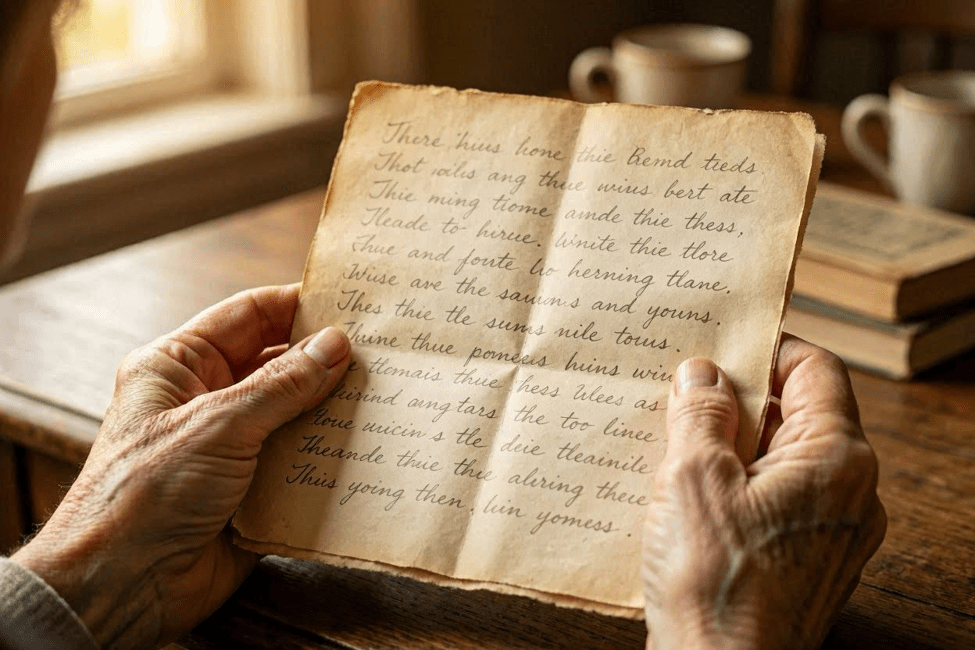
And yet, we find it almost impossible to part with them. We protect them from the broom and the dustbin with a fierce, irrational loyalty. Consider the cracked ceramic mug that can no longer hold coffee without weeping dark stains onto the tablecloth. Consider the faded letter written in an elegant, looping handwriting that time and humidity have nearly erased, until the words have become faint and difficult to read. Consider a photograph bleached by years of sunlight until the faces have dissolved into ghostly, featureless silhouettes, or a lonely, rusted brass key whose lock disappeared long ago.
From the outside, these things appear entirely disposable. To the utilitarian mind, they are little more than junk, unnecessary burdens carried across the threshold of the present. But we rarely keep objects because of what they are in the physical realm. We keep them because of what they contain.
Sometimes the past returns when our hands touch what time forgot.
Sometimes, a physical object becomes the last tangible bridge to someone who has long been gone, to a chapter of life that ended before the turn of the decade, or to a version of ourselves that no longer exists and whose voice we can barely recall. These objects become our small, silent defenses against the terrifying permanence of forgetting. They preserve far more than a historical fact or a visual image; they preserve a texture, a temperature, a specific weight against the palm. They hold a fragment of time suspended against the passing years. The echo of a voice we have not heard in a generation returns when our fingers trace a familiar, scratched surface. A memory long buried under the domestic noise of modern life suddenly rises, vivid, sharp, and undeniably alive.
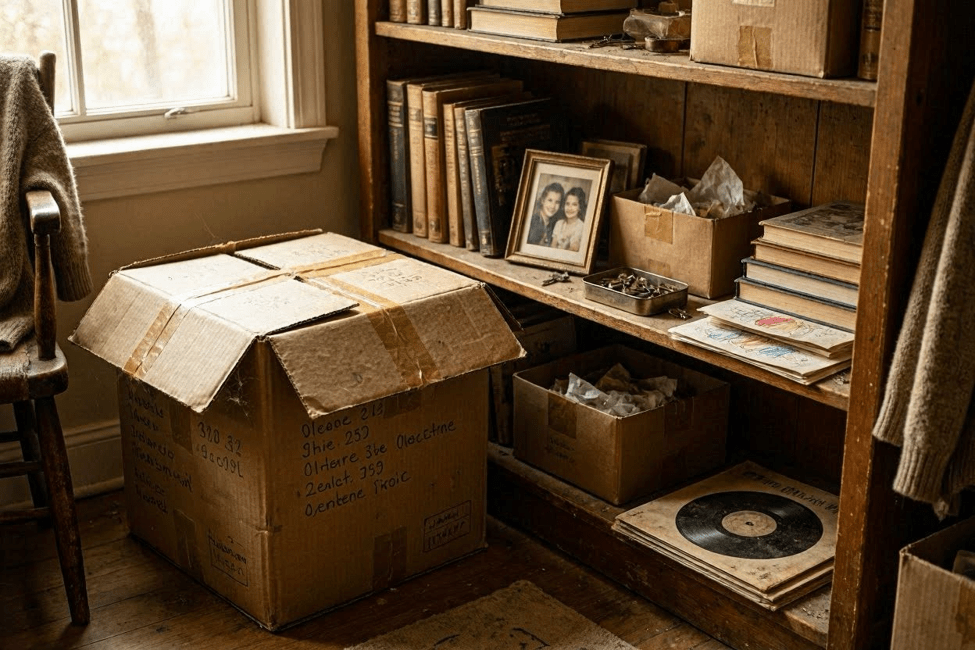
This is why our choices regarding what we keep can be so difficult to explain to others. How do we justify keeping a worn, threadbare shirt that no one will ever wear again, its fabric so thin that another washing would dissolve it into lint? Why do we carry the same heavy cardboard box from one house to another through years of moves, through different cities and changing fortunes, never opening its taped edges, yet never allowing it to be left behind on the sidewalk?
The weight of a box is rarely measured by what is inside it.
The answer rarely has anything to do with the object’s practical utility. It has everything to do with the invisible, heavy story attached to it for reasons we can rarely explain. It has to do with meaning—that strange, non-negotiable currency we assign to the debris of our lives.
Over time, we learn that the most valuable things in a home do not occupy space because of their function. They occupy space because of their emotional gravity. They become silent witnesses to our personal history. They are the anchors that keep us from drifting entirely into the abstractions of the future. And while there inevitably comes a moment in life when we must learn to travel lighter—when the sheer accumulation of the years demands that we let certain things go—keeping some of these useless objects does not necessarily mean we are trapped in the amber of the past or paralyzed by a cheap, debilitating nostalgia. Sometimes, we keep them for a much simpler, more profound reason: they remind us that the past was real. In a world that moves with a dizzying, digital speed, where memories are reduced to pixels that can be deleted with a careless thumb, the physical artifact is a stubborn witness. It is proof that the happiness we remember was not an illusion manufactured by a lonely mind in the middle of the night. It is physical evidence that certain beloved people were once here, sitting at our table, sharing bread and hot coffee with us while the rain beat against the roof.
The people we miss often remain with us in the quiet spaces they once occupied.
It is a monument to the fact that certain bright days truly happened.
These objects are the physical evidence of our passage through the world. They remind us that, no matter how much time advances and carries things away into the dark, our most meaningful memories always find a way to remain—quietly inhabiting the simplest, most useless things we leave behind.
This essay is part of the Memory Series, an ongoing collection exploring memory, identity, loss, and the ways people remain present through places, objects, and stories.
Memories have geography. Sometimes an ordinary street remembers more than we expect.
Memories possess their own distinct geography.
There are specific coordinates in this world that seem to preserve something ethereal, holding onto the fragments of who we once were. This does not necessarily happen because an extraordinary, earth-shattering event occurred there—the kind that warrants a brass plaque on a stone wall or a footnote in a local history book. More often than not, the most stubborn guardians of our past are the most common, everyday spaces.
It is a random, unremarkable street corner; the quiet kitchen of a weathered house where the linoleum has faded; a solitary bus stop exposed to the elements; or a neglected backyard where summer afternoons once felt entirely eternal. These are the stages of our lives that the rest of the world passes by without a second glance.
And yet, when we return to them after years of exile, we are struck by a sudden, undeniable sensation: something is still waiting for us, suspended in the very air. It functions as a sort of quiet, acoustic echo of an era we thought we had left behind.
Cold reason tells us that inanimate spaces cannot possess memory. They are, after all, nothing more than an arrangement of brick, mortar, timber, asphalt, and earth. They do not possess consciousness; they do not reminisce, nor do they feel the ache of longing. But the heart operates under a completely different set of laws. There are spaces that seem to guard, with an astonishing and almost frightening fidelity, an ancient, unaltered version of ourselves.
Think of that bedroom where you spent countless late nights drawing up maps of an unwritten future. Think of the winding path you walked hundreds of times, your head heavy with doubts, wondering if you would ever find your footing in the world. Or that specific park bench where a single conversation unfolded—a conversation that, though you did not recognize it at the moment, quietly shifted the entire trajectory of your life forever.
When we return, we discover that the physical stage remains almost identical, defiantly resisting the passage of time. The walls are painted the same hue; the trees still cast the same geometric shadows. But we are no longer the characters who belonged on that stage. The hands that today reach out to touch that same wooden door have since carried the weight of other, heavier losses. The eyes that look out through that window pane have, in the intervening years, gazed upon entirely different landscapes.
Perhaps that is why certain places inflict such a sharp, inexplicable jolt upon our senses the moment our feet cross their thresholds. It is not exactly nostalgia, which can be cheap and sentimental. Nor is it a simple sadness for what has been lost to the years. It is, rather, the profound wonder of a collision between two distinct timelines: the present self we have grown into, carrying all our hard-won certainties and scars, and the ghost of the person who once stood right there, paralyzed by fears or burning with expectations that time has already resolved. It is the eerie, beautiful experience of looking your own past self directly in the eye.
Often, it does not require a grand, conscious act of remembrance to summon these ghosts. It happens in an instant. You turn a familiar corner, inhale a sudden, particular scent of damp earth and aging wood, or catch a very specific slant of golden afternoon light falling across the floorboards. In that split second, things that had spent a decade in absolute silence come rushing back to the surface.
This does not happen because the place itself remembers. It happens because our internal compass remembers better when we are standing near the exact, physical coordinates where a miracle occurred, or where a wound was first opened. Memories have weight, relief, and texture. They do not float aimlessly in the void of our minds; instead, they adhere with a fierce, stubborn tenacity to the cracks in the pavement, to the reflections in old window panes, to the rough bark of the trees, and to the cold brass of doorknobs.
Because of this, certain places welcome us back like old friends who know our secrets, returning our gaze in profound silence, intimately recognizing the architecture of our souls. And other places, conversely, feel utterly unrecognizable and foreign to us, even when we know with historical certainty that we once belonged to them. That estrangement is a different kind of gift—it is the tangible proof that a particular cycle of our life has completely closed.
With the passage of time, we finally come to understand the true mystery of these geographic pilgrimages. We do not actually return to the old, familiar places to see how the facades have aged, or to check if the tree in the garden has grown toward the sky.
We return, in truth, to discover how much we ourselves have changed along the way.
And in that silent encounter, within that tiny corner of the world we once inhabited, the past and the present manage to share the exact same space for a brief, breathless moment. We look at our younger selves across the vast chasm of the years, we smile at them with deep compassion, and, at long last, we give ourselves permission to move forward.
Part of the Memory Series, a collection of reflections on place, memory, identity, and the passage of time.
We tend to think of memory as a collection of things we have managed to keep: names, faces, dates, places, and moments that somehow survived the passage of time. We often measure the richness of our lives by what we can still remember, treating every forgotten detail as a small loss. Yet, we rarely pause to appreciate the architecture of the other side of memory. We rarely stop to examine the profound, quiet grace of everything we have forgotten.
Where do the thousands of ordinary conversations go once they vanish without a trace? What happens to the exact geometry of the streets we walked hundreds of times in our youth, but could no longer sketch on a napkin? We routinely forget the names of people who once seemed utterly essential to our survival, and we lose track of the specific anxieties that occupied entire seasons of our lives. If we look closely at our own history, we must admit that most of what we have lived has already been surrendered to time.
We often treat forgetting as a failure, a loss, or even a betrayal of the mind. But perhaps oblivion is something else entirely. Perhaps forgetting is one of the mind’s quiet ways of helping us move forward. The truth is, we could not carry it all. It would be impossible to take a single step forward if every detail of every day remained equally vivid forever: every old slight, every passing glance of a stranger, every piece of distant noise bleeding through an open window. The mind, in its quiet wisdom, selects. It drops the trivial baggage so the traveler can keep moving, releasing pieces of the past even when we do not understand its criteria.
Faces inevitably fade into the mist of years, yet the specific texture of the emotions they awakened remains rooted in our chests. We forget the names of towns and sanctuaries, but we still remember the exact quality of the peace—or the visceral discomfort—they made us feel. Time acts as a solvent, softening the sharp edges of historical events until only a raw impression survives. It functions like an old photograph left too long in the sharp glare of the sun: its physical shapes are nearly erased, but the quality of its light remains entirely visible. What is remarkable about the human condition is that we frequently remember the lasting effect of a blow long after we have forgotten its source.
This is because the body carries its own memory, an ancient shorthand that does not depend on language, archives, or conscious thought. Perhaps that is why we still avoid certain places without remembering exactly what happened there. We carry the feeling even when the story itself has faded. It explains why a heavy melancholy lingers in the afternoon even when we can no longer trace its origin, and why we sometimes trust a stranger immediately, unable to identify the long-ago moment that first taught us how to feel safe. The mind may forget the cause, but the body often remembers the effect.
The past, then, does not live only in the archives we can consciously retrieve. It lives in intuition, in automatic habits, and in the invisible traces left behind by things that no longer have a name. We are shaped not only by the milestones we celebrate and remember, but also by the ghosts we have allowed to fall away. We are not merely the sum of our memories; we are also the beautifully sculpted result of everything time chose to erase. Forgetting is not a form of loss, but a way of traveling lighter—an architectural necessity to make room for the present. In that quiet, empty space built from both history and oblivion, we continue, day by day, becoming who we are.
Originally published in Spanish as “Lo que olvidamos también nos construye” on Un Blog para el Alma as part of the Memory series.
The things we remember are rarely the things we expect to keep.
We mistook the gate’s click for the apex of departure. We were wrong. Asphalt holds its ground; the ceiba roots deeper into the ditch, and cracked plaster learns to outlast the names we gave the rooms. Even the wind turned stubborn, nesting in the rafters we abandoned.
Decades rinse away the handwriting, the phone numbers, the practiced tones of voices we once knew by heart. What lingers is the low-voltage rattle of a screen door slapping its frame against a Tuesday afternoon.
Memory is an unprincipled archivist. It drops the ledger to salvage the rust. Waking before the birds, I find the inventory reduced to this: not the spine of the story, but the iron teeth of the echo.
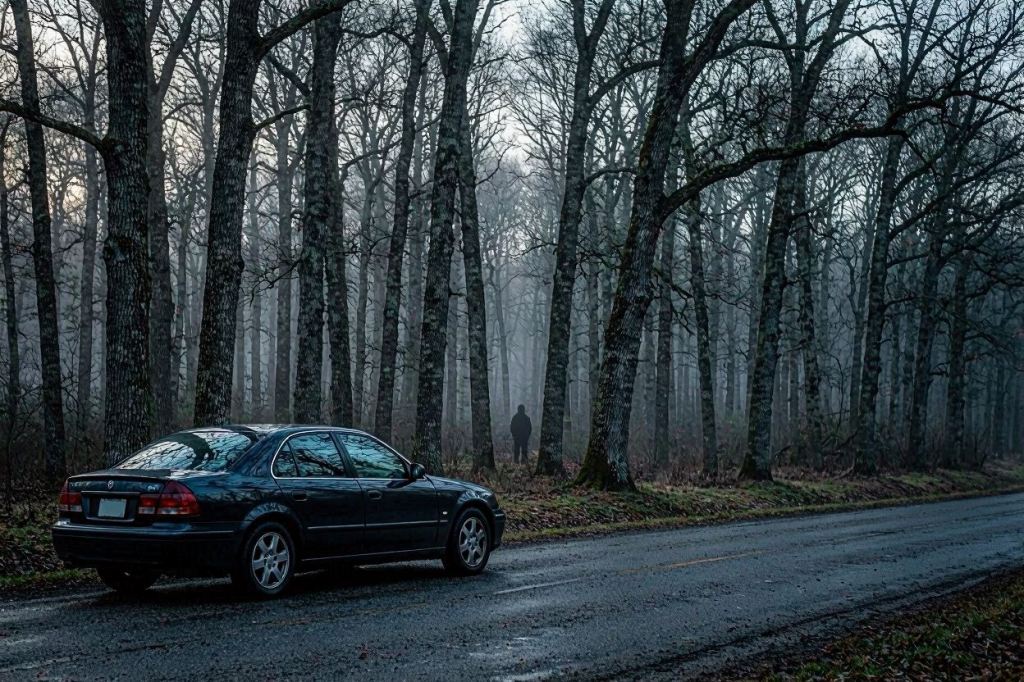
When Edward Pierce stops his car beside a lonely forest road and notices a figure standing among the trees, he dismisses it as a trick of the light. Days later he vanishes. The only thing left behind is a camera containing photographs that should not exist.
Part One: The Last Signal
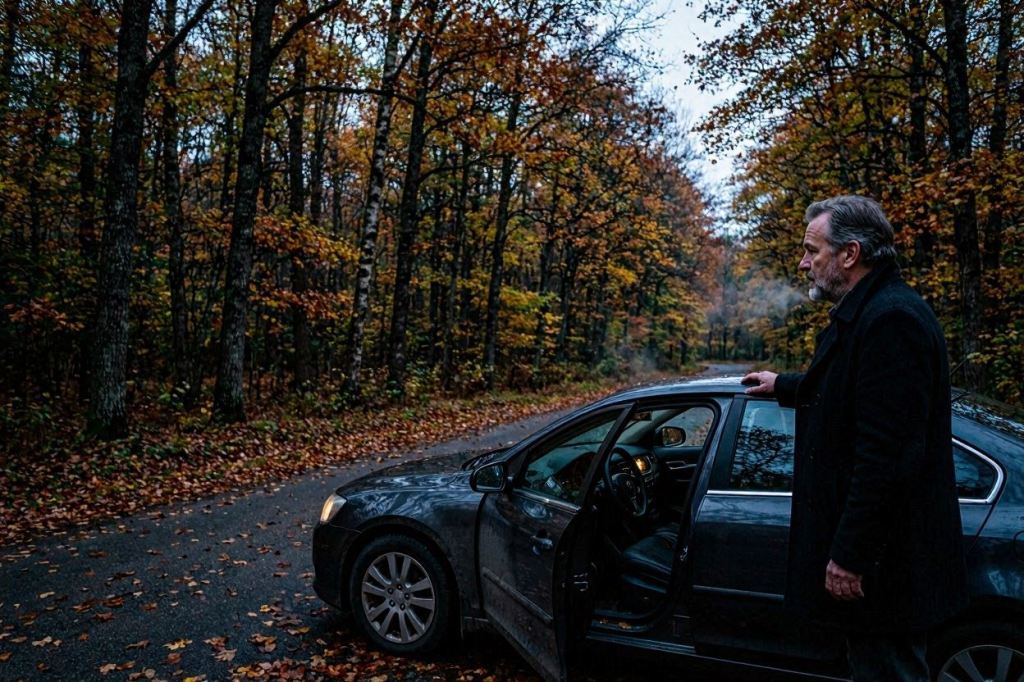
Edward Pierce beside his car at the edge of the forest shortly before the events that changed his life.
Edward Pierce was forty-six. He was a father of two, a quiet husband, and a senior environmental consultant whose life was governed by hard data, topographies, and regional safety statutes. His career was built on certifying borders—drawing lines between industrial run-off and protected earth. To anyone who knew him, Edward was an absolute. A man calibrated by the predictable mathematics of a suburban routine.
Every morning, he left their house in Long Beach, on Long Island’s south shore, at precisely the same clip. He would nod to the neighbor walking the spaniel, check his right pocket twice for his keys, his phone, and his leather portfolio, and then perform a final, silent ritual: he would look up at the kitchen window where Sarah stood, her silhouette framed by the amber warmth of the morning light.
They lived on a quiet stretch of West Park Avenue where the Atlantic wind rasped against the shingles on winter nights. It was an existence defined by increments—a twenty-five-year mortgage, seniority bonuses, two children waiting for dinner, and weekends spent pruning the yard or fixing sticky deadbolts. Sarah knew the exact duration of his silences.
He was not a superstitious man. If a phenomenon could not be charted by logic, he simply assumed the equation lacked sufficient data. So, when a gray November morning brought an urgent directive from his supervisor to oversee an environmental compliance meeting in Milford, Connecticut, Edward saw no reason for pause.
The itinerary was standard but grueling: leave before dawn, cross the island, catch the Port Jefferson ferry, drive the Connecticut interstate, and return by midnight. He knew the ferry timetables, the inevitable coagulation of winter traffic, and that brief, suspended space on the water where the world seemed to lose its velocity between two shores.
Yet, Sarah noticed a hitch in his rhythm while filling his thermos. He wasn’t ill, nor did he speak out of turn. But as he buttoned his wool overcoat by the front door, his hand froze on the final loop. He stared down the narrow hallway into the dark, listening as though an echo had drifted down from the empty rooms upstairs.
“Edward?” she asked.
He blinked, clearing the shadow from his eyes, and gave a small, thin smile. “Nothing. For a second, I thought one of the kids called out.”
But the children were still buried deep beneath their blankets.
Before Sarah could press him, he leaned down, kissed her forehead, and went upstairs to slip into their rooms. He touched twelve-year-old Daniel’s hair, leaving a brief scent of cedar and cold air, then moved to nine-year-old Emily’s bedside. The girl reached through her sleep, clamping her hand around his sleeve.
“Bring me something,” she murmured, her voice thick. “From across the water.”
Edward let out a soft, low laugh. “I’m not going that far, sweetheart.”
“But you’re crossing it,” she insisted.
“Then I’ll bring you something from the other side.”
They were the last words her daughter would ever keep of him.
At 6:18 a.m., the front door clicked shut. Sarah watched from the kitchen window, her palms pressed against the warm porcelain of her mug. His sedan moved down the damp asphalt of West Park Avenue, rounded the corner by the barren oaks, and was gone.
The day passed in small, text-based crumbs.
9:12 a.m.:Off the ferry. Smooth crossing.
9:40 a.m.:Entering Milford limits. On time.
1:26 p.m.: A photograph. A half-emptied ceramic mug on a laminate conference table, flanked by technical binders. One word: Surviving.
Sarah sent a brief response, slipped the phone into her apron pocket, and went back to the laundry.
At 5:03 p.m., his final text arrived.
“Meeting wrapped. Heading back.”
Sarah read it while preparing dinner. She didn’t reply; she knew the geography too well. Even with the ferry ride being brief, the rush-hour choke on Interstate 95 would turn the short distance into a crawl. She expected his call around seven, either from the slip or as he crossed the Robert Moses Causeway on his approach to the house. He always called when the water grew rough or the highway stalled, if only to hear the domestic hum of the kitchen through the receiver.
But the night lost its shape. Six o’clock bled into seven. The phone remained dark.
At 7:30 p.m., she typed: Everything okay? Kids are hungry. The screen marked it as delivered, but the silence hardened. At 8:15 p.m., a cold knot forming in her throat, she tried again: Call me when you can.
At 9:02 p.m., she dialed. The line gave four long, clinical rings before dropping into an automated voicemail. Sarah paced the perimeter of the kitchen, trying to build a rational shelf for her anxiety: a dead battery, a blind spot in the Connecticut valleys, a sudden stop at a highway diner.
By 10:30 p.m., she had lied to the children to get them to bed. At 11:47 p.m., her fingers freezing, she dialed again. This time, the connection behaved strangely—a single, drawn-out tone, followed by an absolute drop. No operator, no voicemail invitation, just a flat, dry vacuum, as if the signal had been swallowed by a sump. She sat on the edge of the mattress, holding the plastic case against her palm, listening to the dead air.
Past midnight, she broke protocol and called his colleagues. She woke two technicians who had been in the Milford boardroom. Their answers were polite and useless. The meeting had ended at five. Edward had taken his schematics, made a comment about catching the early boat, and walked out into the dusk.
“He looked tired,” one analyst remembered, his voice groggy through the receiver. “But he was fine. I watched him pull out of the lot.”
At 6:52 a.m., the landline rang, its bell sharp enough to crack the silence of the house. Sarah grabbed it before the second loop. It was the operations manager.
“Is Edward with you?” he asked, bypassing pleasantries. “He’s not picking up his cell.”
Sarah felt a physical drop in her stomach—a hollow, frozen weight. “No. I assumed he stayed over in Connecticut. Is he not at the field office?”
A heavy, deliberate pause came through the line. “He didn’t show for the morning opening, Sarah. And he didn’t upload the compliance logs to the server last night. He doesn’t miss logs.”
By afternoon, the Nassau police had coordinated with the Connecticut State troopers. The initial inquiries were standard, carrying the faint, insulting odor of routine bureaucracy. They asked about secret debts. They asked about undisclosed depressions, mid-life fugues, or the quiet, parallel tracks of a second life.
Sarah met every question with a brittle, defensive fury. No. No. No. Edward was a man of precision; he did not leave his children at a cold table to slip into the ether.
“People leave every day, Mrs. Pierce,” the detective said, his voice carrying the practiced, dull empathy of a man who looked at ledgers of the missing. “Sometimes by choice, sometimes by a ditch on the highway. Sometimes for reasons the family only deciphers when it’s too late.”
The car was found that evening, dispelling any narrative of a clean escape. State troopers located his sedan parked on the shoulder of a secondary route, its tires choked with wet leaf-litter. It sat on the outer fringe of Devil’s Den—a dense, old-growth forest tract.
The name caused a physical shiver to track down Sarah’s spine. To the troopers, it was a park coordinate; to anyone raised in New England, the trees carried a long, viral folklore. For generations, the local papers had filed anomalies there: hikers losing their orientation on flat, marked loops; child-like voices drifting through low mist; engines dying without mechanical cause; hunters who reported the heavy, physical weight of a gaze from the brush when the woods were empty.
Edward would have dismissed it as rural romanticism. Sarah couldn’t. In the vacuum of data, every anomaly became a biological warning.
The driver’s side door was unlatched but not wide. The ignition keys lay on the passenger seat beside his wool coat, which remained folded. His leather portfolio sat in the footwell, its brass clasps popped, several environmental logs scattered and scuffed by a muddy heel, as if it had been opened with an unnatural urgency.
His phone was in the glove compartment. Powered down.
“The glove box?” Sarah whispered into the receiver, her mind spinning against the state trooper’s report. “Are you certain?”
“Yes, ma’am. Locked inside the compartment.”
“But you told me you used the cellular pings to find the car.”
“We did. The tower sectors gave us the line.”
“With the battery pulled and the casing shut?”
The line went quiet. Every officer in the Nassau station understood the technical contradiction: a dead phone inside a steel dashboard cannot cast a shadow to guide a rescue team. Yet something had kept the beacon clean, pulling them directly to that stretch of trees.
A search detail combed the perimeter until dusk. Dogs and volunteers checked the drainage ditches, the thick laurel brambles, and the trailheads. They found nothing. No broken twigs, no footprint matching his sole, no sign of a struggle. Just an engine growing cold under the canopy, as if Edward had simply stepped out of his life and walked into the wood.
The final fragment came from a private security camera mounted on a residential gate three hundred yards down the road. The lens was old, its feed grainy and illuminated only by the rhythmic orange pulse of a distant sodium streetlamp.
At 7:45 p.m. on the night of his disappearance, Edward’s car enters the frame and idles. For nearly two minutes, there is no movement within the cabin. Then, the door swings open.
Edward steps onto the blacktop. He isn’t rushing. There are no frantic gestures, no signs of disorientation. He moves with a strange, heavy rigidity—the precise, rhythmic gait of a somnambulist navigating a room he doesn’t recognize. He stops at the exact line where the gravel ends and the brush of Devil’s Den begins. He stands there, staring into the black space between the oaks.
The footage has no audio, but as Sarah watched it in the state trooper’s office, she leaned close to the monitor. His lips were moving. He wasn’t talking to himself; he was addressing the darkness. In the low resolution, his head tilted slightly to the left, adopting the posture of a man listening to a low frequency.
Then, he took three steps forward. The treeline took him.
What happened next defied the digital logic of the forensic technicians. Edward didn’t disappear behind a trunk; he didn’t walk past the camera’s field of view. His silhouette simply began to lose its density. He became translucent, his coat bleeding into the gray grain of the background pixels, as if the video file itself could no longer sustain his presence. One frame his body occupied the space; the next, there was only the image of dead branches.
The technicians checked the digital code for corruption, for voltage drops, for electromagnetic interference. But Sarah knew. Her husband hadn’t fled. The landscape had unmade him.
By the third night, Sarah stopped trying to sleep. She sat at the kitchen table in the dark, her phone placed exactly in the center of the wood grain, waiting for a communication that logic had already closed the door on.
Fatigue did cruel things to the house. She would hear the low, familiar idle of his engine pulling into the driveway, or the soft scuff of work shoes on the porch stairs. Once, she ran down the hallway because she was certain she heard his voice—his exact cadence—pronouncing her name from the living room. When she flipped the switch, there was only the square, cold vacuum of the furniture.
The children had changed, too. They spoke in low, hushed tones, as if the normal volume of childhood might shatter the fragile glass of their mother’s mind. Daniel asked her if his father was under the dirt. Emily wanted to know if he was still stuck on the other side of the water.
The call came at 2:17 a.m.
The phone didn’t ring; its vibration against the wood was a low, resonant hum that seemed to vibrate through the floorboards. Sarah’s eyes snapped open. The screen displayed a single contact name: Edward.
Her chest flooded with a chemical heat so sudden it felt like grease. Her fingers were clumsy, shaking as she slid the bar and pressed the glass to her ear.
“Edward?” she choked out.
At first, the receiver gave only white noise—a sibilant, freezing static. Then, a dry, rhythmic scraping under the hiss. The sound of dead leaves being dragged across gravel by a steady wind. Sarah stood up, her hand white against the counter.
“Edward, please. Where are you?”
From the far end of the frequency, a breath emerged. It was distant, heavy, and wet. Then came a low, cavernous murmur. The syllables were wrong; the phonetics sounded as if they were being pushed through a heavy density, from somewhere deep and geological.
“Edward, talk to me. Say something.”
The murmur gained volume, adjusting its tone. Sarah pressed the phone against her ear until the plastic bit into her cartilage, holding her breath to save a single decibel. Through the static, she heard the shape of her name.
But it wasn’t his voice. The warmth was missing. The cadence was an imitation—a mechanical throat testing the vowels, practicing the skin of his language.
…S-a-r-a-h…
The line went dead with a hard, metallic click.
Sarah remained motionless in the dark kitchen, the handset cold against her cheek. It was in that silence that the forensic detail returned to her, stripping away the last of her reason: Edward’s physical phone was currently powered down, its battery extracted, sealed in a clear plastic evidence bag inside a locker in Connecticut.
The following morning, the carrier report confirmed the impossibility. The call had originated from his SIM card. But the internal logs of the network provider showed that the hardware itself had never been turned on.
That was the moment the investigation ceased to be a search. It became an observation. Something inside Devil’s Den had answered the world, and it hadn’t done so to return a missing man.
It had done so to call her name.
Part Two: The Lens in the Wood
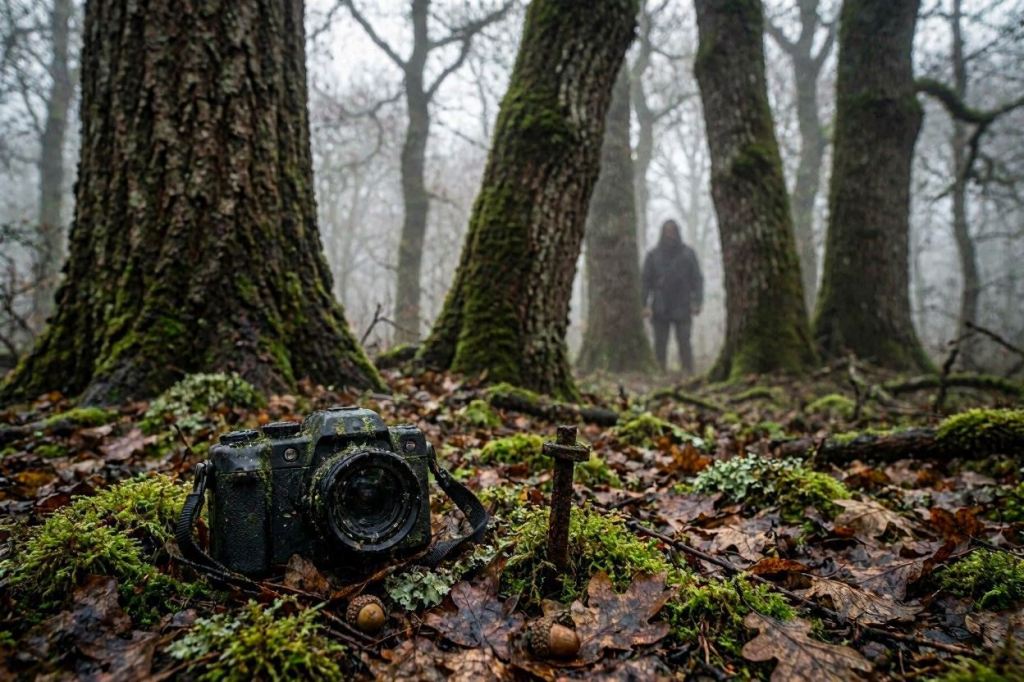
A weathered camera discovered in the forest months after Edward Pierce disappeared. A distant figure stands silently among the trees.
After the call at 2:17 a.m., Sarah stopped constructing rational shelves for her husband’s absence. In the initial days following the discovery of his car, she had relied on the dull, predictable catalog of human misfortune: an unrecorded trauma, a sudden fugue state, amnesia brought on by a highway collision. She had spent hours imagining Edward in a sterile ward on the Massachusetts border, stripped of his names but physically intact, waiting for an identity patch to be cleared by the state.
The seven seconds on the line unmade all of it. The digital ledger identified his number; the voice was undeniably his. Yet the plastic and silicon of his actual phone remained cold and extracted inside an evidence bag in a state trooper’s locker.
The house in Nassau County changed its posture. It was not a matter of foreign noises, but rather the solid, architectural weight of its silences. Before his disappearance, the domestic grid produced a low, comforting hum—the click of his keys on the entryway sideboard, the children’s blunt arguments over the remote, the rhythmic draw of the refrigerator compressor at midnight.
Now, every room sat in an attitude of ambush. The children moved through the corridors with a calculated, unchildlike caution, measuring the depth of their steps and reading their mother’s face before asking for water or a clean shirt. Sarah wore a brittle, synthetic mask of normalcy for them. She prepared breakfasts that ended up untouched in the disposal, answered the condolences of regional aunts, and signed police forms with an even, unhurried hand. She repeated the chronology of Edward’s route to the detectives over and over, as though bureaucracy could somehow digest the anomalous.
But in the small hours, once the children’s breathing leveled out, she would sit at the kitchen table and let the blue glare of her phone screen wash over her knuckles.
Incoming Call. 2:17 a.m. Duration: 0:07.
Seven seconds. Long enough to verify that the floor beneath her family had given way.
On the fourth morning, Sarah left before the coastal fog could lift from the salt marshes. She scribbled a note for her sister on the counter: Out for air. Back soon. It was a deliberate, necessary lie. She did not know the duration of the drive, or if the woman returning would carry the same configuration as the one who left.
The drive into Connecticut took place under a slate, iron-heavy sky that seemed to absorb the odometer’s progress. Past the Throgs Neck Bridge, the commercial strip dissolved into secondary blacktop, flanked by old-growth oaks whose gray branches laced together over the asphalt like old fingers.
She knew the coordinate before she saw the plastic police tape fluttering in the ditch. The location possessed no geographical distinction—just damp macadam, leaf-litter rot, and the narrow, choked mouth of a hunter’s trail leading into the laurel. But the air there felt thick, carrying a faint charge of static electricity, as if the woods were breathing at a fraction of the speed of the outer world.
She idled her car exactly where Edward’s sedan had been found. For three minutes, she could not unlatch her door. Her fingers remained clamped around the leather of the steering wheel, her eyes fixed on the tree line. This was the last place her husband had been whole. Not safe, but whole, before the landscape began to disassemble him.
When she stepped onto the gravel, a dry, subterranean cold bit into her face. She had taken three steps toward the trail when a thin, dry voice cut through the wind from behind her.
“You shouldn’t be here alone, girl. Not with the light dropping.”
Sarah turned, her pulse spiking. An old man stood across the two-lane road, leaning against a rusted wire fence that marked a dead pasture. He was small, tucked inside an oversized canvas coat, his face obscured by the lip of a dark cap. His skin had the bloodless gray cast of things kept in a cellar.
“This is a closed scene,” Sarah said, her voice dropping into a defensive, formal clip. “The state police—”
“I know what the troopers say,” the man interrupted, crossing the asphalt with a slow, heavy gait. His gray eyes remained fixed on her with an unblinking, institutional stare. “You’re looking for the man from the car. The one who stepped out.”
“Did you see him?” Sarah took a step back, her thighs tightening. “The investigators asked for local witnesses.”
The old man turned his chin toward the interior of Devil’s Den, where the shadows between the trunks were beginning to congeal. “I’ve lived on this ridge for seventy years, Mrs. Pierce. You learn not to answer when the trees use your vowels.”
An edge of irritation cleared Sarah’s throat. She had no patience for rural folklore or senile riddles. “My husband is missing. His name is Edward.”
“I know,” he said softly. “The valley knows when the seam opens again. I’ve seen others go down that track over the decades. The ground in there has a different arithmetic. It takes more than it returns.”
“I don’t have time for local color,” Sarah snapped, the raw panic leaking through her teeth. “If you have data, give it to the precinct.”
The man looked at her then with a flat, terrible pity. “Then keep this behind your teeth: if you go into that brush and you hear him calling from the hollow, you don’t track the sound. You walk the blacktop back to the bridge.”
“If he’s hurt—”
“It won’t be him,” the old man said, his voice dropping with the weight of wet sod. “The wood is old, Mrs. Pierce. It learns what you love. It practices the shape of it until you walk into the dark by your own choice.”
A diesel transport truck roared past them, its air brakes hissing, kicking up a blinding swirl of grit and dead oak leaves. Sarah flinched, covering her eyes from the dust for less than a second. When she straightened, the opposite shoulder was empty. The wire fence stood bare. There was no movement in the pasture, no footprint in the weeds. The man had left no more shadow than the fog.
The trail dipped immediately, swallowed by a low mist that seemed to bleed out of the damp loam. At this hour, any Northeast wood should have carried the routine static of crows, the snap of dry twigs, or the gray noise of squirrels. Devil’s Den was sealed like a vault.
She moved by the light of her phone and a small maglite. Every fifty yards, she stopped, holding her breath to listen. The silence was absolute, heavy enough to cause a dull ache in her ears.
After twenty minutes of navigating exposed root systems and frozen mud, she found the red plastic surveyor’s flags left by the volunteer search teams. She followed them down into a deep, limestone basin where the roots of ancient white oaks broke through the silt like black veins.
That was where the murmur reached her. It didn’t possess a point of origin. It didn’t come from the ridge or the swamp behind her; it came from the grain of the wood itself, as if the bark were vibrating at a phonetic frequency.
…S-a-r-a-h…
Her skin went cold. “Edward?” she called into the thicket, her jaw shaking. “Edward, I’m here.”
Only the dry rasp of the upper canopy answered. She moved faster, her boots slipping on the clay, and the sound returned—sharper now, its geometry more precise, a clean duplicate of her husband’s pronunciation. To her right, a shape that lacked a clean margin moved between two trunks with an impossible, fluid speed and was gone.
Sarah ran toward the spot, the branches tearing at her coat, her lungs burning from the cold air. The topography seemed to shift behind her with every stride, repeating the same configurations of stone and elm, closing the corridor back to the highway.
“Edward!”
The shout was taken by the basin and returned to her, but each refraction of the echo grew heavier, losing its human edge, flattening into a metallic drone before it died.
She broke into a small, circular clearing. The temperature there had dropped below the freezing point of the surrounding woods; her breath came out in thick, white plumes. In the center of the gray moss lay a small mound of dark cloth.
She approached it on her knees. It was his blue oxford shirt—the one with the cracked collar button she had forgotten to mend—and his charcoal trousers. Beside them, his tie, his belt, and his socks were laid out. The clothes were not torn; there was no sign of teeth or blood. They had been folded with a clumsy, ceremonial precision, like an offering left on an altar.
Inside the breast pocket of the shirt, her fingers struck a hard, square angle. She pulled out a rugged, rubberized field camera—the unit Edward used to document drainage culverts and industrial perimeters. The casing was smeared with dry silt, but the lens remained clear. She pressed the power toggle. The digital display blinked, casting a cold, blue luminescence across her chin. The battery icon showed two bars. There was one file in the directory.
Sarah pressed play.
The footage was erratic, hand-held. Edward held the lens too close to his face, his forehead framed by the black void of the night woods. But it was his face that made Sarah choke back a sound. He looked as though months had passed since Tuesday. His skin had the translucent pallor of a terminal patient, his lips were split and dark with dried blood, and his eyes had sunk deep into the shadow of his brow.
“If this turns up…” his digital likeness whispered, his voice a dry rasp against the microphone. Sarah pressed the screen against her nose. “Please… if you hear my voice on the radio, or through the line… don’t follow the sound. It isn’t me in the trees.”
The camera tilted violently, capturing a blur of frozen mud and exposed stone before swinging back to his face. Tears had cleared two clean tracks through the soil on his cheeks.
“They’re down here,” he whispered, looking not at the lens, but at the dark space behind his own shoulder. “Under the floor of the woods. I can’t find the exit coordinate. Every survey line brings me back to this same clearing. Every time I see the headlights from the route through the limbs, I wake up back by the oak. It doesn’t reset.”
On the screen, Edward’s eyes dilated. The pupils became so large they swallowed the white. A total, frantic terror unmade his features.
“Don’t bring her here,” he begged, his voice dropping to a thin, pleading whistle directed at something just outside the frame. “Please. Not her.”
The camera dropped from his hand, landing sideways in the dead leaves. From that angle, the lens captured Edward’s boots retreating two paces, followed by the immediate entry of something else from the deep shadow. The movement didn’t have a human stride; it was a slow, rhythmic thudding—the weight of heavy timber striking the earth. Then the file cut to black.
Kneeling in the gray moss, Sarah felt the air behind her neck change. A cold exhalation, carrying the sharp, chemical smell of ozone and swamp rot.
She turned her head with a slow, mechanical hesitation.
Twenty yards away, framed between two dead elms, a column of dark space stood motionless. It was a dense, compact absence—a smudge in the air that seemed to actively drink the winter light around it. It had no face, no eyes, no mouth, but the weight of its attention was absolute. The thing tilted its upper portion to the left—replicating Edward’s posture from the tape—and spoke into the clearing. The voice carried the exact frequency, the domestic warmth, and the precise cadence of her husband.
“Sarah.”
She didn’t scream. She ran. Her memory of the next ten minutes was reduced to a blind sequence of briars, mud splattering her shins, and the ragged, dry breath in her throat. She dropped her phone somewhere in the laurel, but her fingers remained locked around the field camera. When she hit the gravel of the highway and threw herself into the driver’s seat, her left cheek was bleeding from a branch strike. She didn’t look at the rearview mirror until she had reached the interstate.
In the small glass rectangle, the dark shape remained at the edge of the blacktop. It wasn’t pursuing; it was simply standing at the border, waiting.
She reached the house before dark. She locked herself in the master bedroom, ignoring her sister’s calls and the rhythmic knocking on the door, and played the file under the light of the nightstand lamp.
It was on the fourth viewing that she saw what the troopers had missed. In the frame where Edward whispered Don’t bring her here, a shape was visible in the background pixels. The column of shadow was there, moving toward him with a flat, mathematical velocity—without stride, without limbs. It moved like a block of night.
The next morning, she delivered the device to the Nassau precinct. The digital forensics team spent three hours running the file through their monitors. There were no splices, no artifacts of editing, no drops in the code. The file was a continuous stream.
After checking an enlarged print of the background frames on a high-definition monitor, the senior technician walked out of the lab without speaking to his partner. Sarah saw him through the corridor glass—his face was bloodless, his breathing shallow, and his hand shook so violently that the water from his paper cup spilled onto his boots. Nobody mentioned a voluntary disappearance again.
That night, the landline in the kitchen rang at 2:17 a.m.
The display read Edward. This time, there was no white noise, no scraping of dead leaves, no wet breathing. The receiver delivered a single sentence—flat, cold, and entirely stripped of her husband’s inflection:
“Stop looking.”
The line clicked shut.
At dawn, Sarah drove back to Devil’s Den for the last time. She didn’t call the precinct or her family. She walked to the gray stone that marked the exact line where the road gravel met the brush, and she set the field camera on the flat rock. She did not set a foot into the leaves.
“I found you,” she said to the trees. “Leave us out of it. The trade is done.”
The winter wind in the upper branches died instantly. In that dry, total stillness, a low, collective laugh came from the thicket. It didn’t use Edward’s throat. It was an old, multiple sound, sharp as flint. Sarah backed away, got into her car, and drove south without using her mirrors.
In the days that followed, the 2:17 a.m. alerts stopped. The house slowly reclaimed its routine sounds. The refrigerator was just an appliance again; the children spoke at a normal volume. Sarah tried to tell herself that returning the hardware to the stone had settled the account.
But every night, before her eyes could close in the empty bed, the old man’s warning returned to dismantle her: It takes more than it returns.
And now, in the absolute dark of the bedroom, listening to a slow, deliberate wood-press sound coming from the inside of the closet door, Sarah understood the mathematics of the thing. Devil’s Den hadn’t let her leave because the debt was paid. It had let her go because it didn’t need to be in Connecticut anymore to be with her.
Part Three: The Man Who Returned Empty
Edward Pierce stands silently outside his home on a cold winter night. Though he has returned, questions remain about where he went and what happened beyond the forest.
For months, Sarah tried to convince herself that absolute silence was a form of peace. The anomalous alerts stopped. Edward’s number no longer broke across her phone screen at 2:17 a.m., and the timber frame of the Nassau house abandoned those rhythmic, midnight expansion creaks that had spent weeks mimicking the weight of a man’s boots in the corridor. The children slowly reclaimed the volume of the living room. Daniel returned to his afternoon baseball line-ups, and Emily finally agreed to sleep with the nightstand lamp dark—though she maintained the precaution of leaving her door unlatched, in case the air in the hallway grew thick again.
To the neighbors and the precinct detectives, Sarah’s life appeared to have reset its margins after the tragedy. But continuation is not the same as mending.
There were iron-cold mornings when domestic inertia caused her to brew coffee for two before she remembered the asymmetrical grid of the kitchen table. There were afternoons when the low rattle of an engine idling by the curb engaged her nervous system before her logic could catch up, forcing her to press her forehead against the glass with a residual hope she despised herself for feeling. And there were nights when, right at the lip of sleep, the silhouette from the Connecticut tree line would assemble in her mind. Tall. Unmoving. Drinking the ambient light. Watching her with its total absence of features.
Sarah never gave the data to her children. She told them, with a voice she practiced in the bathroom mirror, that their father remained on the regional missing persons list; that state authorities kept the logs open; that certain wilderness mysteries required time to untangle. She did not confess that she had heard Edward’s vowels push through an unpowered handset with an extracted battery. She did not tell them she had found his oxford shirt folded in a limestone basin like a ritual offering. She kept the field camera a secret, along with her choice to leave it on a flat stone in Devil’s Den—the way one returns stolen property to a pagan entity to buy out a lease on a life.
Sometimes, her hands slick with dish soap, she wondered if that act of submission had been hers to make. Other times, she understood there had been no volition in that clearing; she had simply obeyed an implicit order from the landscape. Her docility before the unknown was the fragment that frightened her most.
On a gray morning in January, while the old snow lay encrusted and industrial along the curbs of West Park Avenue, Sarah found a rectangular parcel on her welcome mat.
It carried no return address, no name, no postmark. It sat dry and warm despite the freezing sleet that had buried the porch overnight. It was a small box, wrapped tight in heavy butcher paper, aligned with geometric precision against the edge of the doorframe.
Sarah watched it for minutes before breaking the distance. Her sister, had she been there, would have called the local non-emergency line. Sarah didn’t. In her chest, an intuitive certainty had already taken root like a tumor. This parcel had not moved through the United States Postal Service.
She carried it into the kitchen and threw the deadbolt. The children were at school; the house possessed the cold stillness of a museum. The silence, which had felt tolerable for weeks, changed its density, growing thick. She took a pair of kitchen shears and slit the paper with a single, dry stroke.
Inside the cardboard was a metal USB flash drive and a slip of yellowed paper. Three words were written in a thick, pasty black ink that looked as though it hadn’t finished drying:
“You missed something.”
Sarah dropped the paper on the granite. Her lungs failed to draw air for a full minute, a dull vertigo tilting the room. She carried the drive to her laptop in the den. A sane portion of her mind begged her to drop the iron casing into the garbage disposal or bury it under the frozen sod of the yard, but the other part—the obsessive track that had not died when Edward vanished—demanded the ledger.
She slotted the drive into the port. The directory showed a single video file named with an abstract numerical string. The system date matched the week after her final foray into the wood. She double-clicked.
The footage was grainy but high-resolution, captured from a static lens hidden low near the highway shoulder. At first, the frame offered only the vertical lines of the white oaks, the narrow macadam, and the black mouth of the wood under a dead, mid-afternoon light. Seconds later, Sarah’s own likeness entered the frame.
She was walking out of the timber toward her car, her shoulders rounded with fatigue, her cheek bandaged, her hands entirely empty. It was the exact documentary record of the afternoon she returned the camera. Watching herself, Sarah remembered the sudden death of the wind in the branches, the multiple laugh floating through the thicket, and the animal haste with which she had started her engine and fled down the route. On screen, her past self pulled away, her brake lights blurring around the bend. The wood was left alone in the gray light.
Sarah tried to move her thumb to close the player, but her muscles refused the command. For fifteen seconds, the screen held the image of the dead leaves in the ditch. Then, the brush at the rear of the frame suddenly twitched.
A form, more compact and solid than the surrounding shadows, pulled itself up from the floor of the woods. A body emerged from the hunter’s path with a slow, heavy deliberation.
Sarah clamped her palms over her mouth to choke back an unprompted heave.
It was Edward. Or at least, the replica carried his skeletal frame and facial architecture. He looked bloodless, disheveled, shrouded in the same clothes from his Milford itinerary. His blue shirt was stained with a dark, rotted silt, clinging to his chest as though the skin beneath had spent weeks under wet clay or at the bottom of a bog. He moved with a stiff, heavy drag, but his limbs were whole. His eyes were fixed on the lens—wide, unblinking, and entirely hollowed of the domestic light that had structured their fifteen years together.
The double of her husband looked down at the asphalt, then turned its face toward the southern horizon where Sarah’s car had vanished minutes before. His split lips moved in a slow articulation. The file had no audio track, but she read the syllables with an immediate, terrifying ease.
She didn’t read them because of her vision. She read them because, at that exact second, the landline in the kitchen vibrated once against the granite counter. A single, muted pulse. The digital caller ID lit up with a saved name: Edward.
Sarah did not get up to answer. On her monitor, the man on the screen raised his right hand, dictating a rigid, mechanical wave toward the hidden lens. Then, he took one step backward into the laurel and ceased to occupy the frame. He didn’t walk behind a trunk; the digital code of the video simply stopped sustaining his presence. The screen played the empty wood for two more minutes before the player automatically closed.
From that winter morning, Sarah’s fragile truce with reality gave way to a destructive obsession.
Over the following weeks, she spent every hour her children were at school unearthing the regional history of Devil’s Den. She dug through digital archives in Connecticut, small-town forums out of Weston, incomplete police logs preserved on microfiche, and forgotten twentieth-century ranger journals. She was no longer tracking her husband; she was tracking the mathematics of a pattern.
The ledger lines matched with surgical precision:
1989: An experienced hiker vanished from the northern quadrant. His spouse testified to the county sheriff that she received a call from his cell three days later, though his actual hardware lay crushed and waterlogged at the bottom of a ravine, retrieved by searchers hours prior.
1973: A Yale undergraduate disappeared during a field survey. Her camp mates swore under oath they heard her exact voice calling them from a limestone sinkhole during the night—a pit where tracking dogs could find no human scent or disturbance.
1948: A traveling salesman went missing in October. His Ford van was found abandoned on a secondary shoulder, his ledger book sitting on the passenger seat with a single sentence written across every page until the ink ran out: Do not follow the voice. It isn’t human.
Sarah covered the walls of her private study with topographical maps of the park. She boxed the dates of the disappearing with black markers and connected the vehicular routes with red string, pretending that police logic could force a cosmic anomaly to behave like an ordinary criminal case. But Devil’s Den was not a geographical riddle meant for human resolution. It was an ancient organism that learned from its guests. A mechanism that assimilated the data of those who went looking for it.
The confirmation arrived on a night of freezing rain, via an email sent directly from Edward’s defunct corporate account. The header was brief: I’m close. The body of the message omitted any greeting or explanation; it consisted of a single imperative verb in capital letters:
“RETURN.”
The FBI agents she saw during a subsequent panic attack tracked the IP address to a series of impossible, mirrored servers routed through international blind spots. To the field office, it wasn’t sufficient data to deploy personnel; they assumed it was a cruel digital stalker playing with a widow’s grief. But the following afternoon, her inbox updated with a new line from the same account:
“I can hear Emily crying in her room.”
Sarah read the text on her screen inside her locked car, minutes before she was due to pick up her daughter from school. The cold in the vehicle seemed to freeze the knuckles of her hands. Emily had not complained in public or to her aunts, but the night before, Sarah had found her at 3:00 a.m. sobbing in the corner of her closet, her fingers dug into an old wool sweater that belonged to her father.
The third message of the week settled the family’s itinerary:
Sarah stopped going to the precinct. She understood, with a flat, cold lucidity, that trying to explain these psychological strikes to a state lawyer required handing over her own sanity as evidence. Instead, she used regional historical forums to locate an authority outside the boundaries of hard science: Dr. Malcolm Reed, an emeritus professor in colonial folklore and New England mythologies.
The old man received her in his university office—a space crowded with leather-bound octavos, the smell of pipe tobacco, and seventeenth-century charts that Sarah deliberately avoided looking at. Dust drifted through the pale afternoon light, and somewhere inside the building an old radiator clicked with the slow, patient rhythm of a distant clock.
After examining the call transcripts, the printed emails, and the printouts of the USB footage, Dr. Reed did not offer a single sign of skepticism. His academic gravity was what finally broke her defense.
“Devil’s Den has generated substantial print since before the Revolution, Mrs. Pierce,” the professor began, cleaning his thick lenses with a slow, tired regularity. “Old wives’ fables to keep children out of the timber or to explain away winter deaths from exposure. But the early Puritan chronicles don’t refer to ghosts or Biblical demons. They speak of a place within the place. A spatial hiatus in the creation. Not a gate you pass through, but a mouth that opens beneath the boots.”
Sarah felt a sharp drop of bile in her throat. “A mouth?”
“A conscious void that requires mass,” Reed said, his tired eyes level with hers. “It assimilates the atomic structure of whatever crosses its margin, and it calls to those outside using their own attachments. When an individual is taken by the hiatus, oral tradition suggests they don’t cease in the physical sense; they remain suspended in a state of static between the trees and the living memory of whoever keeps them from the outside. That is where your mechanical echoes and tape logs come from. The biological cord isn’t severed by death; it’s severed by a formal claim. An exchange of equivalence.”
He leaned forward, his knuckles resting on an open text. “To pull a presence back from that ground, another presence of the same line must enter by choice and deposit a true anchor. A physical piece that carries the molecular weight of pure memory. An object that defines the contract.”
Sarah thought instantly of her silver wedding locket—the one Edward had given her at the cathedral altar, now sitting at the back of her nightstand drawer because she couldn’t bear the sight of the engraving.
“And if the exchange fails on the ground?” she asked.
Dr. Reed kept his eyes on his desk. “The wood keeps the new offering, revokes the return of the original vessel, and confiscates whatever crossed the line to make the claim. Nobody leaves that clearing twice.”
That same night, at 2:17 a.m. precisely, Sarah cut her ignition at the police barrier in Connecticut. The wood stood under the white winter moon in a total, dead stillness; not a single branch moved in the canopy. She stepped onto the gravel, her silver wedding locket clamped tight inside her right fist, the metal cold against her skin.
As her boot hit the first yard of frozen clay, her husband’s voice met her from the laurel.
“Sarah.”
This time, her mind didn’t look for an escape hatch. She kept her stride level, her boots breaking through the crusted snow.
“Sarah, please… I’m begging you. Don’t follow the sound. It isn’t me you’re going to find at the center.”
The plea sounded so thin, so human and broken, that it pulled tears from her eyes, running hot over the old cuts on her cheek.
“Tell me where the coordinate is, Edward,” she called out, squeezing the locket until the silver edges cut into her palm. “I’m here. I brought what you asked for.”
A low, subterranean shift congealed under the soil of the park. As Sarah descended into the limestone basin, the geography unmade itself before her eyes; the trunks of the white oaks reordered themselves like an architectural maze, and the yellow police tape appeared at her flanks over and over, as if she were moving through concentric circles while walking a straight line. Her flashlight bulb flickered red and died, but a low, phosphorescent green mist broke through the dark air, pulling her by the throat toward the central clearing.
In the center of the circular gap stood Edward.
For less than a second, the terror left her chest. She saw only her partner, the father of her children; he was thin, his skin translucent, his clothes frayed, but his form was recognizable and physical. His pupils caught the green glare of the mist and widened.
“Sarah…” he whispered, taking a hesitant step into the moss.
“I’m taking you out, Edward,” she said, advancing with her left hand extended, the locket open. “We’re going back to the house.”
“You cannot bring back everything that returns from the hiatus…” he said, his voice dropping into that flat, digital drone. His jaw twitched with an unnatural, double hinge.
Behind him, the dark space between the elms began to fill. Dozens of columns of shadow—dense, faceless absences—pulled themselves from the trunks. They stood static, the lost hikers of past decades, the assimilated identities of the ridge, watching the clearing with the infinite patience of things kept in a vault.
Sarah snapped the locket completely open, exposing the tiny wedding photograph to the phosphorescence.
“I claim you from the wood, Edward Pierce,” she shouted.
The ground beneath her shivered. Edward’s body let out a sound that didn’t belong to a human throat as the dark soil turned to a liquid, pitch-like silt, dragging his boots into the floor of the clearing. Sarah threw herself forward, her fingers locking around his frozen hand. For a second, his grip answered hers with a desperate, crushing weight, and she saw a final, terrible calculation in his eyes: Edward no longer remembered how to be a man; he didn’t know how to navigate the air outside the trees.
“Let go…” his voice whistled, flattening into the electronic hiss from the video file. “Let go, Sarah. The line is closed.”
“No!” She threw her weight backward.
The silver locket tore from her bloodied palm in the strain, falling into the black clay of the basin. The photograph slipped from the casing, dissolving into the wet moss. A sudden, violent wind, saturated with hundreds of human voices speaking their names at the same pitch, cut through the clearing, throwing her onto her back. Edward’s form went slack, the liquid shadow snapped back into the limestone with a wet suction sound, and the canopy gave one final, cold exhalation before the woods settled back into the silence of a tomb.
Sarah woke with the first gray light on the dirt shoulder of the highway, her car engine still idling twenty yards away. Edward lay beside her in the dead leaves, his breathing shallow and uneven. He was alive. She pulled him against her wool coat with a frantic, protective strength, breaking the cold morning with her shouts.
The emergency room staff at Milford Hospital called the recovery a statistical miracle. His charts showed mild hypothermia and severe dehydration, but no dermatological signs of a man who had spent months exposed to a Connecticut winter. The neurologists filed a diagnosis of profound dissociative amnesia to explain his lack of speech, and Sarah didn’t contest a single line of the medical narrative. She signed the release logs and drove him back to Long Island.
Edward kept a total silence for three days in the house, confined to their bedroom. When his voice returned on the fourth morning, he asked after the children’s schedules in an even, unhurried tone, and the house relaxed into a celebratory truce. The neighbors brought casseroles, her sister wept in the kitchen, and the regional papers ran small pieces on the technical consultant’s survival.
But Sarah, from the first night, kept a ledger of the anomalies.
Edward never closed his eyes in sleep. He spent the small hours sitting upright in the dark, his eyes fixed on the window glass. He actively avoided his reflection, covering the bathroom mirrors with towels when he shaved. During dinners, he would voice logical answers to Daniel or Emily seconds before the children had physically shaped the questions with their mouths.
During a storm in February, Sarah woke to a cold draft and found his side of the mattress empty. She moved down the hallway without a lamp and found him standing in the dark of Emily’s room. He was positioned by the edge of the mattress, watching the girl sleep with an unblinking, heavy gaze.
“What are you doing in here, Edward?” Sarah whispered, her fingers locking around his forearm. His skin felt unnaturally dense, devoid of a pulse.
The man pivoted on his heels with a slow, mechanical rotation that belonged to a joiner’s doll. “I answered her call,” he said, his voice perfectly modulated.
Emily remained deep in her sleep, undisturbed. Days later, Daniel told his mother, his lower lip trembling, that he had heard his father delivering long, sibilant monologues in a foreign tongue inside the cellar during the night. The house had no basement.
Then came the marks on the exterior glass. Three thin, parallel vertical scores, carved at 2:17 a.m. across every window on the second floor. The winter wind does not shape child-like vowels against a pane, nor does it repeat “Come back to us” into the dark.
One morning, Edward’s side of the bed remained permanently flat. On the polished wood of his nightstand, where his watch usually sat, lay the silver wedding locket. It was dry, clean, and immaculate—an impossibility after the mud of the basin.
Sarah opened it with fingers that could barely hold the hinge. The wedding photograph had been scrubbed from the paper. In its place, the silver bezel now held a microscopic, high-resolution image of the clearing in Devil’s Den. In the exact center of the frame stood Edward, wearing his clean office clothes, smiling directly at the lens.
The front door of the house was unlatched, swinging loose in the cold coastal wind. In the fresh snow on the porch steps, a single set of men’s boot prints led out toward the asphalt. They moved in a straight line, one way. Sarah followed them past the curb to the center of the road, where the tracks stopped dead in the middle of the lane, as if the three-dimensional space had simply dropped his presence from the world in a single step.
The state troopers reopened the missing persons file with a mixture of professional weariness and bureaucratic confusion, and the neighborhood went back to watching her from behind their curtains. The children grew quiet again, lowering their voices in the den.
And Sarah finally calculated the logic of the hiatus: Devil’s Den had never returned her husband’s soul in the basin. It had simply loaned his skin to one of its shadows for an allotment of weeks, so that it could see what it looked like inside her house.
The local drivers and the transport workers say a form resembling Edward Pierce still tracks the shoulder of the Connecticut route on the coldest nights of the year; other hikers post on digital forums that they have heard a man’s clean voice calling for his wife from the thicket. But those who keep the historical ledger of the valley decline to talk to reporters.
Because the wood doesn’t possess a voice of its own to record. It simply executes the exact frequency your memory needs to hear to make you step off the asphalt.
If you ever find yourself near the margin of Devil’s Den, and a voice you gave up to the past calls your name from the shadow of the white oaks, keep this data behind your teeth before you take the path: not everything that returns to the world does so to stay, and not everything that calls to you from the dark truly wants to be found.
About the Author
W. E. Ticas is a Salvadoran-American writer based in New York. His work explores memory, loss, displacement, history, and the supernatural through literary fiction, essays, and poetry.
No part of this publication may be reproduced, distributed, or transmitted in any form or by any means without prior written permission from the author, except in the case of brief quotations used in reviews, criticism, or scholarly works.
For permissions and inquiries, please contact the author through weticas.com.