
Original FIction
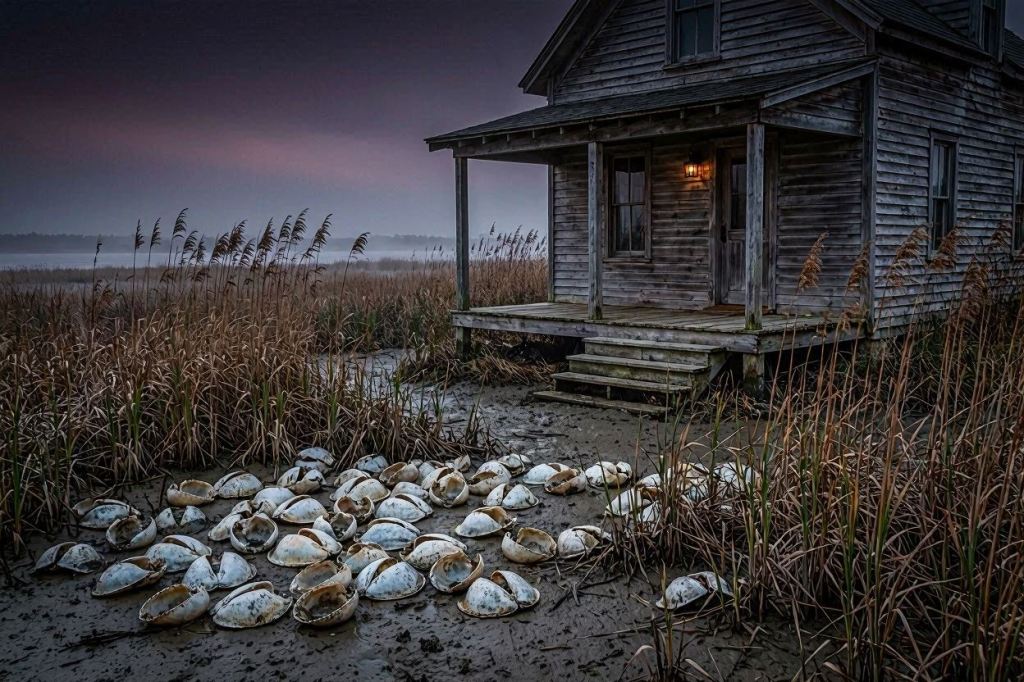
The house sat on an unnumbered plot near Coecles Harbor, where the salt marsh crept into the yard every third spring, leaving behind black thatch and the hollowed carapaces of horseshoe crabs. It was an old structure, framed in saltbox timber that had gone the color of a wet slate shingle, balanced on dry-stacked fieldstone. When the wind came off the Gardiners Bay, the floorboards in the kitchen rose a millimeter, breathing with the tide.
We had moved there because of the silence, or what we mistook for it. On Shelter Island, quiet is not an absence of sound but a pressure—the rhythmic thrum of the North Ferry crossing between Greenport and Shelter Island, the click of gravel under the tires of summer residents who stayed too late into October, the dry rattle of scrub oak against the gutters. After midnight, when the boats stopped running, the island seemed to lift free of the mainland altogether, three thousand souls suspended between the twin forks of Long Island like an unuttered thought.
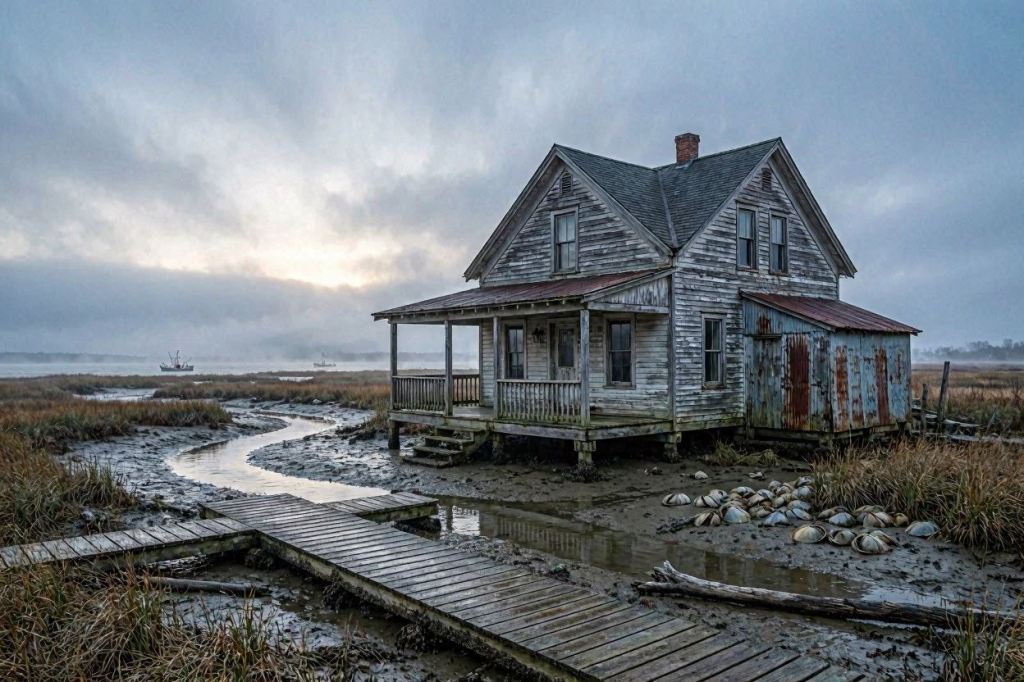
“We don’t need a car,” Julián had said that first June, his voice carrying that low, rhythmic Salvadoran cadence that six years in New York had flattened but never entirely erased. He was standing on the porch, a roll of copper flashing under his arm. “Everything here is within walking distance if you aren’t in a hurry. And if you are in a hurry, you shouldn’t be living on an island.”
He had an old steel-framed Raleigh bicycle he’d found under the crawlspace, its chain rusted into a stiff, brown snake. He spent three evenings in the shed with a can of kerosene and an old toothbrush, freeing the links one by one until they turned with a dry, metallic hiss. That was his way. He did not believe in sudden movements. He believed in friction, in the gradual wearing down of resistance through repetition. When he spoke to the local contractors or the men at the hardware store by the center, his English was precise, slightly formal, delivered with a soft, breathy pues that sometimes slipped between his sentences like a small wedge holding open a door.

By November, the summer people had boarded up their shingled cottages on Ram Island, leaving their kayaks turned belly-up on the grass like dead fish. The island became small again, intimate and slightly menacing. The air smelled of woodsmoke and rotting kelp. My belly had grown high and hard, a tight drum that made it difficult to sit at the kitchen table for long without a cushion behind my lower back.
The contractions began shortly after twilight.
It was a Tuesday. The sky had turned the color of a bruised plum before dissolving into a thick, wet fog that smelled of the fish docks. I was standing by the stove, watching a pot of lentils turn over in the gray water, when the first one took me. It wasn’t the sharp, clean pain the manuals had promised—the neat, wave-like diagrams they showed us in the clinic over in Riverhead. It was an old, dull ache that started in the small of my back, right where the spine meets the pelvis, and stayed there, heavy and cold, like a wet stone dropped into a well.
“Let me see,” Julián said, coming up behind me. His hands were cold from the shed; he had been sharpening an axe on the oilstone. He placed his palms against my hips, his thumbs searching for the notch in the bone. “Is it regular?”
“No,” I said, leaning my forehead against the cool stainless steel of the range hood. “Just a pressure. Like the house settling.”
“We have time,” he murmured. His chin brushed my shoulder. He smelled of three-in-one oil and damp wool. “The ferry doesn’t stop for four hours. We can take the ten o’clock. It’s fine, mi amor. The doctor said first babies take days. They like the dark. They don’t like to come out into the cold.”
But his voice lacked its usual weight. He was looking out the small window above the sink, where the reflection of the kerosene lamp hung over the dark yard like a false moon. Outside, the fog was coming in fast, swallowing the cedar trees one by one. By the time the last tree vanished, the glass showed only our faces, pale and trapped inside the kitchen.
By eight, the space between the dull aches had begun to shrink, though they remained formless. They didn’t have edges. They were large, blunt shapes that occupied the whole room, crowding out the air until I had to open my mouth wide to find enough oxygen to satisfy my lungs.
Julián was walking from the kitchen to the small hallway where the telephone sat on a wicker stand. The house didn’t have reliable copper wiring; the line had been strung across the marsh twenty years ago by an independent contractor who had since died, and whenever the salt air got into the junction box on the pole by the road, the dial tone grew faint, accompanied by a dry, rhythmic clicking—like a grasshopper trapped inside the plastic housing.
“The signal is down again,” he said. He wasn’t loud. He never shouted. But his fingers were twisting the cord around his wrist until the skin turned white. “It’s the fog. It holds the damp against the wires.”
“Try the mobile,” I said from the bed. I had moved there twenty minutes earlier, finding the wooden chair too hard, too uncompromising against my tailbone.
“Nothing,” he said, looking down at the small black screen. “One bar, then none. It’s searching. It’s always searching.”
The hospital was Eastern Long Island Hospital, across Shelter Island Sound in Greenport. To get there, you had to drive north to the ferry slip at Derring Harbor, wait for the Captain Lawrence or the Governor Clinton, cross the half-mile of deep, tidal channel where the currents from the Peconic met the open bay, and then drive another six blocks up Front Street. It was an easy trip at noon on a clear July day, full of seagulls and the smell of diesel and the sight of teenagers eating soft-serve ice cream on the upper deck. At nine o’clock on a foggy November night without a car, it might as well have been on the other side of the moon.
“I’m going to Harry’s,” Julián said. He had put on his oiled canvas jacket, the heavy one with the corduroy collar that smelled of salt and old tallow.
Harry was our neighbor to the west, a retired tugboat captain who lived three hundred yards down the gravel path, past the blueberry thicket. He had a four-wheel-drive Ford with a snowplow frame on the front and a twenty-six-foot Boston Whaler tied to his private dock. He was a sour man who lived alone with a deaf retriever, but he kept his engines clean.
“Don’t leave,” I said. The word came out smaller than I intended, caught in the teeth of another long, slow tightening that seemed to drag my ribs down toward my knees.
“I’ll be ten minutes,” he said, kneeling by the side of the bed. He took my hand. His palms were rough, the skin calloused from the carpentry work he’d been doing for the summer estates on Shelter Island Heights. “Ten minutes, Liliana. Harry will bring the truck around. We’ll drive down to the ferry. Even if the regular run is done, the captain lives by the dock. Harry knows him. They’ll turn the engines over for an emergency. They have to.”
“The wind is coming up,” I said, listening to the loose pane in the bedroom window. It was a high, thin whistle, like a wire being drawn through a keyhole.
“It’s just the fog moving,” he said. He kissed my forehead. His lips were dry. “Respirá. Like we did in the library. Count to four. Hold it. Then let it go.”
I heard the heavy latch of the kitchen door drop into its keeper. Then his boots on the gravel—crunch, crunch, crunch—each step distinct, each step taking him farther from the lamp. After the seventh, the sound changed. It did not fade. It stopped. I waited for the eighth.
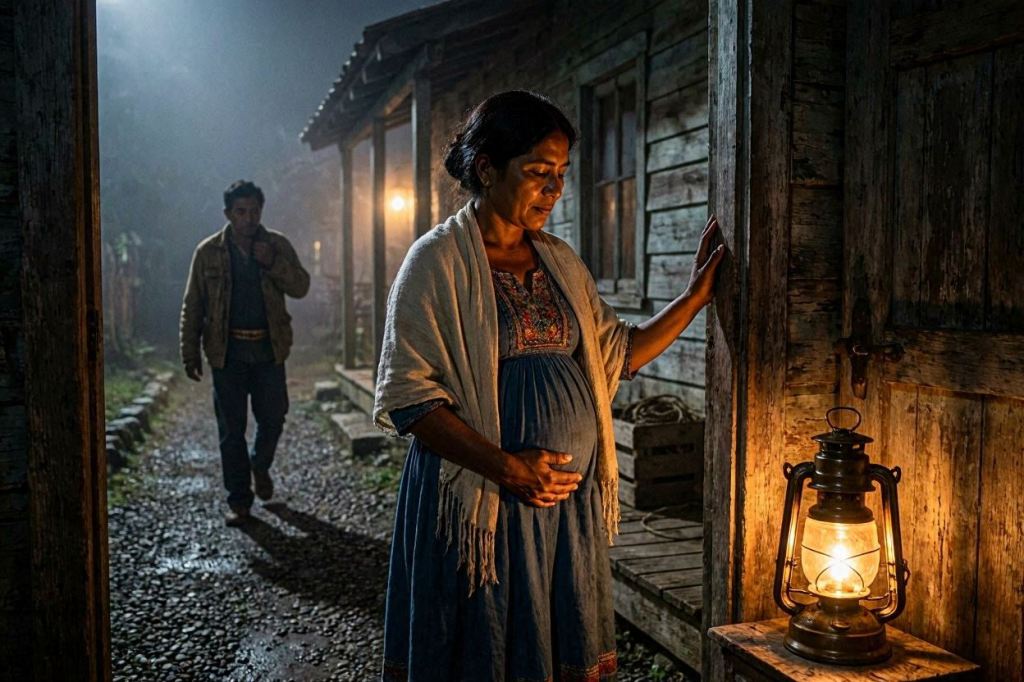
Then there was only the house.
On Shelter Island, when the human noises stop, the insects take over the register. Even in late autumn, there is a small, frantic cricket that lives under the foundation, its song slowed down by the cold into a heavy, mechanical click. Chirp. Chirp. Chirp. It sounded like a clock whose spring had been overwound.
I lay on my side, my knees tucked toward my chest, trying to find the rhythm Julián had promised me. But the room had gone strange. The lamplight no longer reached the corners; it gathered in a small yellow knot around the wicker table, while the pine dresser, the broken rocking chair, and the dark framed print of The Portland withdrew into a grayness that felt deliberate.
The third hour was the longest.
The telephone did not ring, but every few minutes it gave a short, half-hearted ting, the bell inside hitting the clapper without completing the stroke. I managed to roll off the mattress and crawl to the hall, my palms flat against the cold grain of the fir flooring. The wood felt damp, as if the fog had found its way through the sills.
I picked up the receiver. The line wasn’t dead, but it wasn’t right. There was no dial tone, only a dry, rushing sound, like water flowing through a rusty pipe deep underground.
“Hello?” I said. My voice sounded flat, without echo. “Is anyone there?”
A voice came through the static—not a person’s voice, but a recorded fragment, thin and metallic, like an old weather broadcast from thirty years ago. …northwest winds fifteen to twenty knots… visibility near zero in heavy fog… vessels should remain in harbor… Then it clicked, and the rushing sound returned, louder this time, accompanied by a faint, rhythmic thrumming that sounded exactly like a ferry idling in the dark.
I dialed the three digits for emergency.
The connection took an immensely long time to clear. When it finally went through, the ringing was different—two short rings and a long pause, a pattern they hadn’t used on the island since the sixties.
“Emergency,” a woman said. Her voice was very loud, then very faint, as if she were speaking into a tube from another room. “State your location.”
“Coecles Harbor,” I said, my breath catching as another contraction flattened me against the baseboard. “Near the old creek road. The house with the green door. My husband went for the neighbor, but he’s not back. The baby is coming.”
“We have a report of a blockage,” she said.
“A blockage?”
“The ferry isn’t running, ma’am. The visibility is less than ten feet in the channel. The Coast Guard has suspended small craft movement between Greenport and Shelter Island. Is there someone with you?”
“No,” I said. “He went to Harry’s. Ten minutes ago. Or an hour. I don’t know.”
“Stay where you are,” she said. Her voice began to drift again, caught in a wave of static that sounded like dry leaves scraping across asphalt. “Do not… attempt the crossing… the water is not… the Watcher is awake…”
“What?” I shouted into the black plastic mouthpiece. “What did you say?”
“…keep warm,” she said, her voice clear for one final, sharp second. “We will dispatch the crew as soon as the sun clears the tree line. Do not push.” The line went dead with a hard, metallic snap, the kind of sound a fuse makes when it blows under a heavy load.
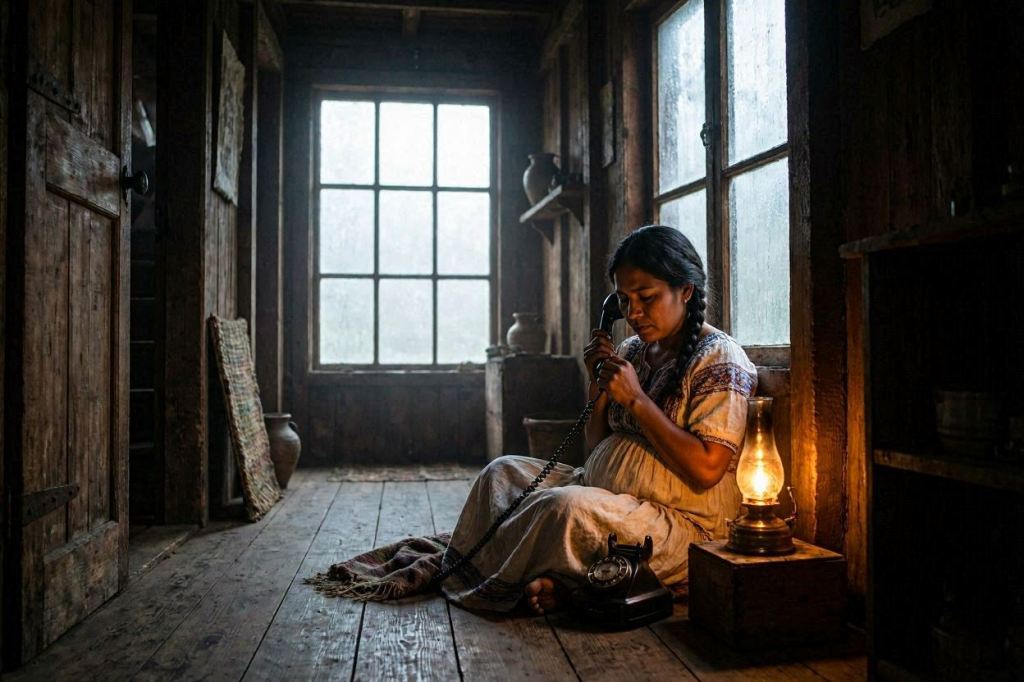
I lay on the hallway floor for a long time, the wood cool against my cheek. The pain had changed. It was no longer an ache; it was a command. Something heavy and iron was being driven between my hips, and each time it came, the house seemed to grow larger around me. The ceiling lifted. The rafters disappeared. The lamp shrank to a pin of yellow fire.
I called his name. “Julián.”
The house took the word and held it. There was no echo. On Shelter Island, the walls are often stuffed with old newspaper or dried eelgrass for insulation, and when the air gets damp, they swallow sound like cotton wool.
I listened for his boots on the gravel. I listened for Harry’s Ford truck—that old diesel V8 that rumbled so loud it used to rattle the teacups in our cupboard whenever he started it up to go deer hunting at dawn.
Nothing came. No headlight beams swept across the wallpaper. No dog barked.
The silence was not empty. It had weight. It pressed against my ears, against my teeth, against the door where Julián should have been knocking.
The delivery belongs to the dark.
I will not describe the mechanics of it—the tearing of the skin, the wet, iron smell of the blood that soaked through the green towel I had dragged from the bathroom, the way the body becomes an engine separate from the mind, working its levers without permission. That part is common. Every woman who has ever sat on a stone floor or a clean hospital sheet knows that shape.
What was not common was the lack of witness.
When the head finally came—a hard, round stone that seemed too large for the world—the room ceased to be a room. It became a clearing, a shelf of rock in the middle of the bay, a place with no walls to hold a scream. I screamed anyway, and the sound went out into the fog and did not return.
The child came out before the birds started. He did not cry. He lay between my thighs, small and dark and slippery, as still as something the tide had left behind.
I cleared his mouth with my finger. My hand shook so hard my fingernails clicked together. For one terrible second there was nothing. Then his chest rose under the gray coat of grease, and he gave a small, thin cry—not the loud, angry wail from the films, but a dry, whistling sound, like a sandpiper caught in the reeds.
I lifted him onto my chest. He was very hot, his skin like an oven compared to the cold air of the house. I took the blue wool blanket from the foot of the bed and pulled it over both of us, tucking his small, wet head under my chin. “You’re here,” I whispered.

The baby’s heart was beating against my ribs—two hundred strokes a minute, a frantic, tiny hammer trying to break through its cage.
We lay there while the window slowly turned from black to a greasy, wet gray. The fog did not lift with the sun; it simply became bright. Every object in the bedroom appeared with cruel precision—the oil lamp burned down to its wick, the dark stain spreading on the pine floor, the brass buckle on my old shoe by the closet. Morning had arrived, but rescue had not.
The paramedics arrived near noon.
I heard the ferry whistle first—that three-long-blasts signal that means the boat is coming into the slip after an interruption. Twenty minutes later, the red truck from the volunteer ambulance corps came down the path, its tires crunching on the gravel with a sound that seemed shockingly loud, almost violent, after the twelve hours of quiet.
They came through the door without knocking—two men from the center, men I’d seen at the post office, their orange jackets bright as pumpkins in the kitchen.
“Liliana?” one of them called out. His name was Miller. He owned the plumbing supply store. “We got a call from the mainland. You okay?”
They found me in the hallway, still sitting against the baseboard with the baby wrapped in the blue wool blanket. They were efficient, their hands big and red and smelling of coffee and tobacco. They cut the cord with a pair of sterile scissors they took from a silver paper pouch, clapped an oxygen mask over my face—the rubber smelled intensely of mint—and wrapped the child in a silver foil sheet that crackled like dry corn husks.
“Where’s Julián?” Miller asked, looking around the empty kitchen. The pot of lentils was still sitting on the stove, the water gone cold and white. “He should’ve been down at the dock waiting for us.”
“He went to Harry’s,” I said. The words felt thick in my mouth, like I was chewing on wool. “Last night. Before the ferry stopped.”
Miller looked at the other man, a younger guy named Corwin who worked for the highway department.
“Harry’s?” Miller said. “Harry’s been in New London since Sunday. His sister’s sick. I fed his retriever this morning myself.”
I took the oxygen mask off my face. “His truck was there. The Whaler was at the dock.”
“No,” Miller said, his voice dropping into that careful tone people use before bad news becomes official. “The truck’s in his driveway, yes. But the keys are on his kitchen table. The house was locked from the outside.”
The investigation lasted three weeks and produced forty-two pages of typed reports, which were later collected into the gray cardboard binder marked Case 007 (Shelter Island).
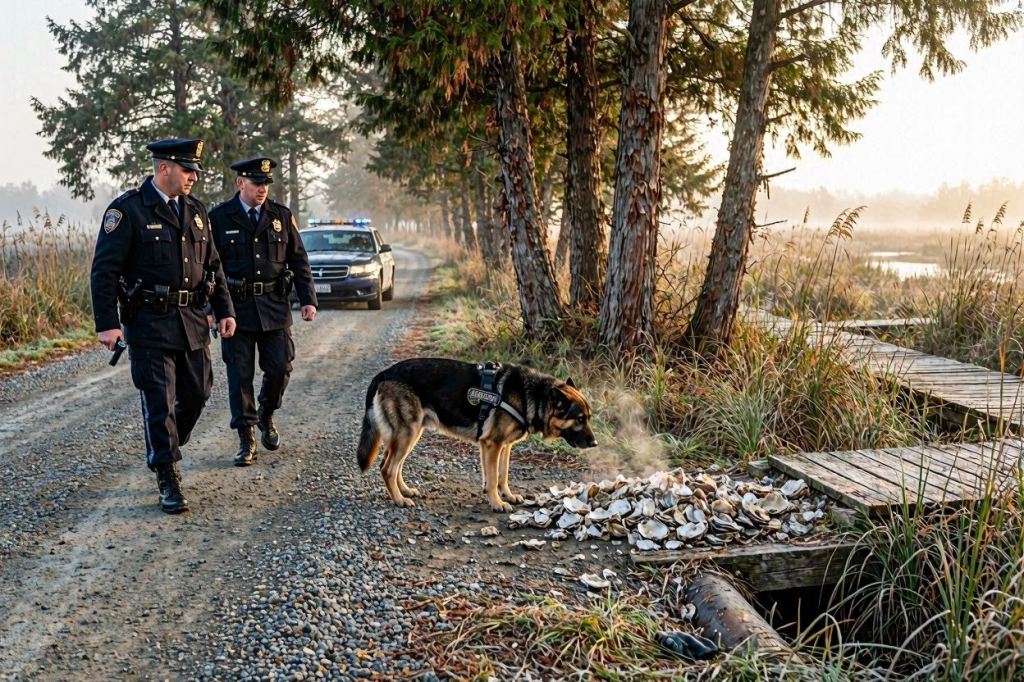
The state troopers brought a dog down from Riverhead—a big, lean German Shepherd with notched ears and a permanent snarl. They started him at our kitchen door. He took the scent from one of Julián’s old flannel shirts, the blue one he wore for painting, and followed it down the gravel path toward the blueberry thicket.
I watched them from the porch, holding the baby against my shoulder. The sun was out then, bright and cold, turning the salt marsh into a field of yellow needles.
The dog ran well for the first fifty yards, nose tucked into the gravel, tail low and straight. Then, where the path bends around the old drainage ditch and the crushed oyster shells whiten the ground, he stopped.
The handler tugged the lead. The dog would not move. He stared at a small patch of weeds between two cedar trees and began to tremble. “Nothing,” the trooper said, coming back up the path. He looked at me with a strange expression—not suspicion, exactly, but the sort of blankness you see in town clerks when you ask for a document that was lost in the courthouse fire of forty-eight. “The scent just ends. Like he jumped into a boat.”
“There was no boat,” I said. “The Whaler was tied to Harry’s dock. The troopers checked the lines. They were covered in the same green slime that’s been growing there all autumn. They hadn’t been cast off.”
The cameras at the North Ferry slip showed nothing either. I went down to the office the following Monday to see the footage myself. The terminal manager, an old man named Dickerson who had known my father-in-law, sat me down in front of a small gray monitor that smelled of ozone.
The tape was black and white, grainy from the salt fog that had coated the lens. It showed the empty slip at 7:40 p.m. The water was flat as oil, the reflection of the sodium lamp on the pier forming a long, white streak across the dark. At 7:42 p.m., the screen went white for three seconds—a sudden burst of static that Dickerson said was caused by a lightning strike over Orient Point, though the weather log showed no thunder that night.
When the picture returned at 7:45 p.m., the slip was exactly the same. The water hadn’t moved. The reflection of the lamp was still there.
“But look here,” Dickerson said, pointing his yellow thumb at the bottom corner of the screen.
On the gravel path that led to the old, abandoned steamboat wharf—a pier that hadn’t been used since the steamers stopped carrying potatoes to Manhattan in the twenties—there was a small object. It hadn’t been there at 7:40.
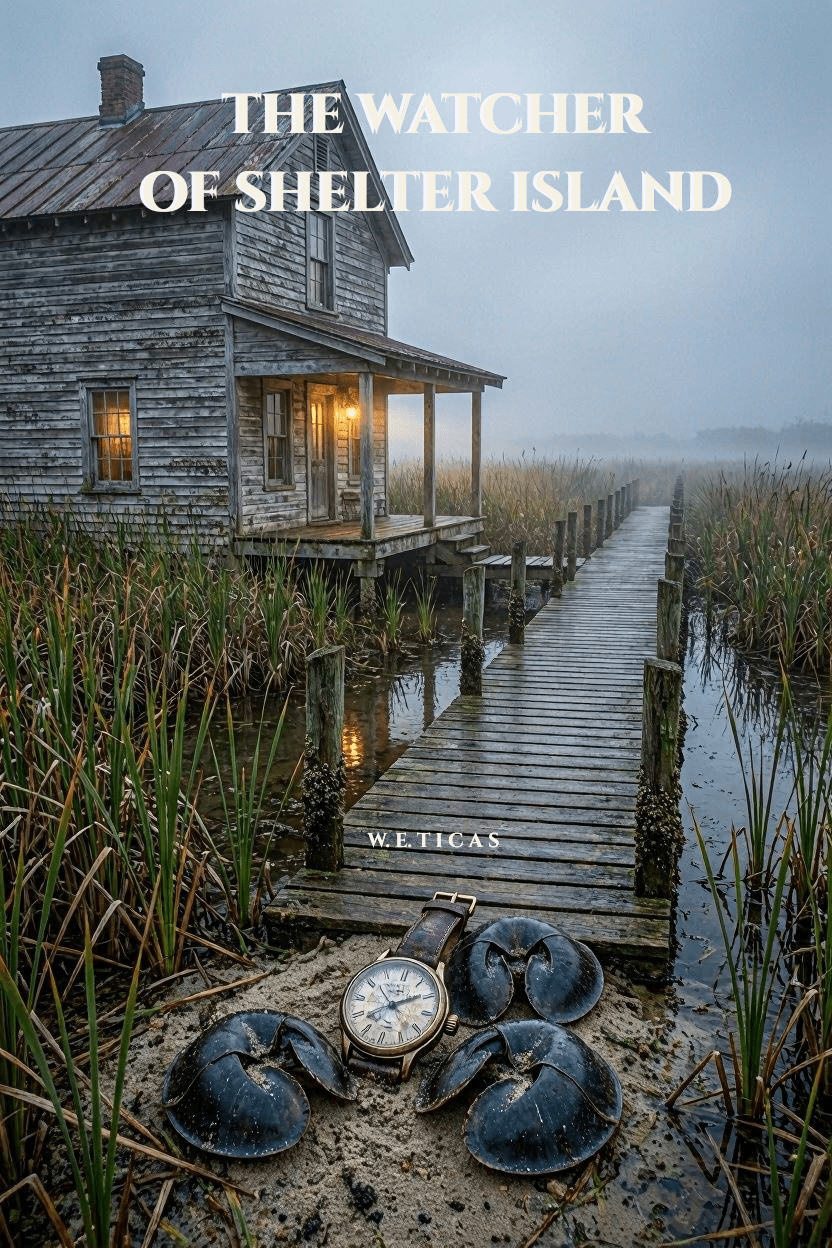
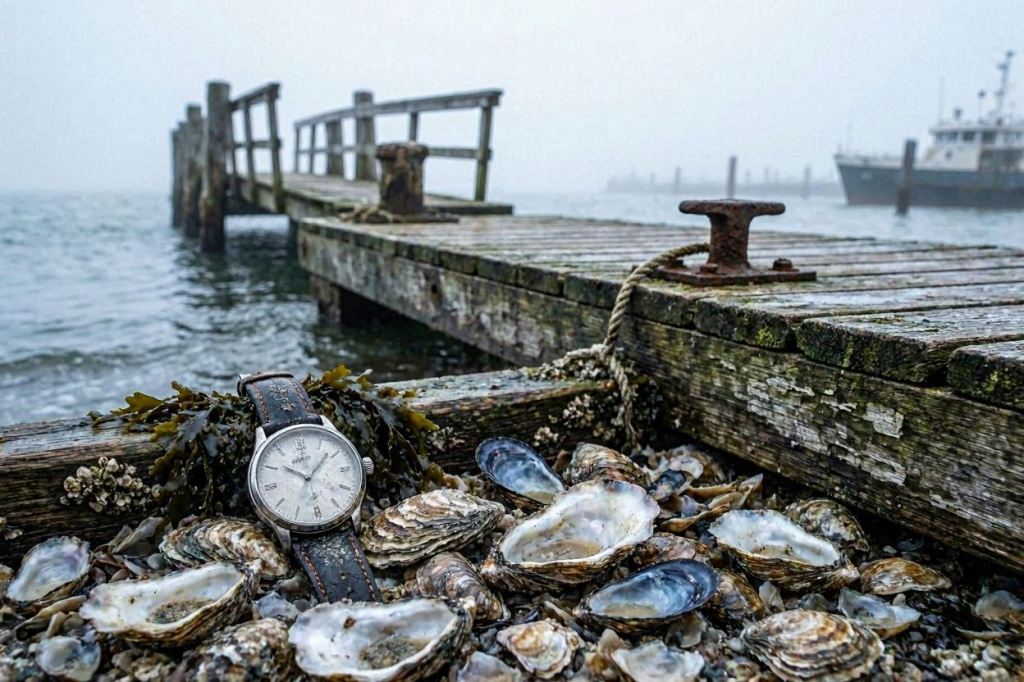
The troopers went down and picked it up an hour later. It was Julián’s watch. It was an old Seiko automatic his uncle had given him for his fifteenth birthday in San Miguel. It didn’t have a battery; it ran on the movement of the wrist, a small lead weight inside turning with every gesture of the hand, winding the spring by the mere fact of living.
The crystal was unbroken. The stainless steel band was unbuckled and laid straight on the stones like a dead eel. The hands had stopped at 7:42.
In the months that followed, the town stopped using his name. On Shelter Island, when a man disappears without a body, he doesn’t become a ghost; he becomes a legal definition. He becomes The Missing Spaniard or The Incident at Coecles Harbor. They talk about him the way they talk about the hurricane of thirty-eight—an event that happened to the geography rather than to the people.
I stayed in the house. My mother wrote to me from San Salvador, her letters full of exclamation points and quotes from the Book of Job, telling me to come home, that the north was a place of salt and death. But I couldn’t move. My legs felt heavy, as if the floorboards had finally succeeded in clamping onto my ankles.
The child grew. I named him Mateo. He had his father’s eyes—not the color, which was a pale, watery brown like my own, but the way they stayed still when someone entered the room, waiting for the person to settle before choosing to look at them.
It wasn’t until Mateo was five years old that the classification officer came.
He didn’t look like a bureaucrat from the county. He drove a dark blue sedan with no seals on the doors and no government plates, just a standard dealer frame from a garage in Queens. He wore a gray tweed overcoat that looked too warm for the weather, and he carried a narrow leather case that smelled of linseed oil.
He sat at my kitchen table, right where Julián used to sharpen his tools. He didn’t ask for coffee.
“We’re closing the log on Case 007,” he said. His voice had no regional accent; it was that flat, mid-Atlantic English you hear from radio announcers who have spent forty years in dark booths.
“Did you find something?” I asked, leaning against the sink with Mateo on my hip.
“No,” he said, opening the case. He took out a single sheet of heavy, unlined paper—not standard copy paper, but something thicker, like the parchment they use for deeds. “We don’t find things, Mrs. Menjívar. We verify the filing.”
He laid the paper on the wood. It wasn’t a report. It was a diagram—two lines drawn in black ink that started from a single point near the bottom of the page. The point was marked 7:42 p.m. One line went straight up, ending at the margin with a small, neat cross. The other line curved sharply to the left, running off the edge of the sheet entirely, its trajectory unfinished.
“He didn’t run away,” the officer said, his eyes remaining on the paper. “And he didn’t drown. If he had drowned, the tide would have left his boots in the reeds by Mashomack. The bay always returns the leather.”
“Then where is he?”
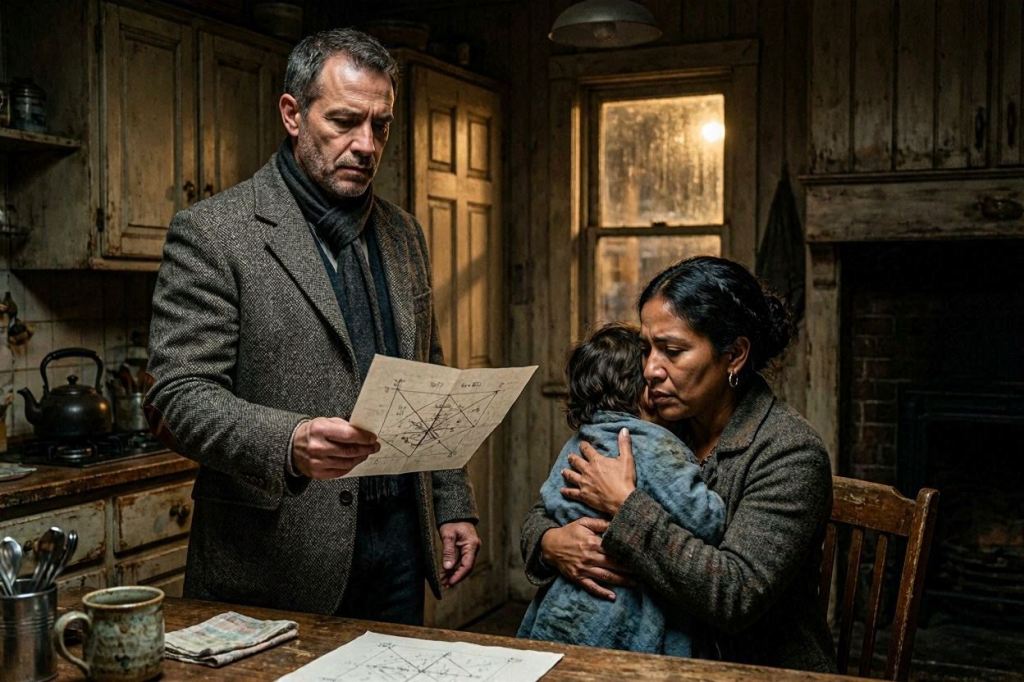
“He’s in the archive,” he said. He looked up then, and his eyes were the color of the bay under heavy fog—neither gray nor white, only an absence of reflection. “During the night of the sixteenth, at the moment of greatest stress—the child in the passage, the line dead, the ferry suspended—the probability matrix for this sector thinned. Your husband existed in two equal trajectories for approximately one hundred and eighty seconds.”
He tapped the straight line with his finger.
“In one trajectory, he stays in the kitchen. He holds your hands. He delivers the child himself using the sewing shears and the cotton string from the pantry. The child survives, but the mother dies of a hemorrhage before the morning boat can clear. That version is currently active in another ledger.”
My hand tightened around Mateo’s thigh. The boy didn’t move; he was watching the officer’s silver pen with a strange, adult intensity.
“And the other line?” I asked.
“The other line is the one you’re sitting in,” the officer said, his voice dropping into a rhythmic drone that sounded exactly like the cricket under the floorboards. “He chose to run for help. He chose to break the circle. The moment his foot touched the oyster shells by the ditch, the system adjusted. The Watcher took the alternate trajectory to balance the ledger. A world cannot hold two versions of the same sacrifice.”
“Who is the Watcher?” I asked.
The officer didn’t answer. He stood up, buttoning his tweed coat with two fingers. He left the paper on the table.
“There is no compensation,” he said, reaching for his leather case. “The state doesn’t recognize archival filing as a death. You will continue to receive the tax assessments for the plot. If you wish to sell, you’ll need a signature from a man who has been gone for five years.”
Now, Mateo is five. He doesn’t ask about his father anymore, because on an island, everyone has someone who didn’t come back from the water. It’s a common condition, like the salt-rust on the hinges or the way the well water turns sulfurous in August.
But at night, when the wind comes off Gardiners Bay and the house begins to breathe, I feel the weight of the other line.
It always happens around three in the morning, during that hour when the body’s clock slows down to its lowest mark, just before the first fishing boats start their diesels down at the town dock. I’ll be lying in the dark, my arm flung over Mateo’s small, warm shoulder, and the air in the bedroom will change.
It doesn’t go cold—cold is something you can fight with another blanket. It goes heavy. It feels as if someone has brought a large piece of wet timber into the room and set it down beside the bed.
I don’t look. I know what’s there.
It is the version where he stayed. He sits on the edge of the mattress, his hands smelling of oil and blood, his canvas jacket damp though he never went outside. He looks down at the floorboards, watching the blood soak into the grain, waiting for the morning boat that will arrive too late to save me.
We exist in the same room, separated only by the thickness of a sheet of paper. He is carrying the grief of my death, while I am carrying the silence of his absence.

The Watcher does not punish us. He does not care about the lentils on the stove or the name we gave the boy or the Raleigh bicycle rusting in the shed. He only cares about the balance. The system requires an equal weight of iron on either side of the scale to keep the island from slipping into the deep water.
Sometimes, Mateo talks in his sleep. He doesn’t speak English; he speaks that low, breathy Salvadoran Spanish he has never heard from me, his small tongue curling around the pues like a wedge holding open a door.
I do not correct him. I lie there in the heavy air, listening to the cricket under the foundation, counting the seconds until the first ferry whistle breaks the quiet and proves, for one more morning, that the channel is still there.
Copyright
Copyright © 2026 Walter Estever Gonzalez (W. E. Ticas)
All rights reserved.
The Watcher of Shelter Island is a work of fiction. The characters, events, and situations portrayed in this story are products of the author’s imagination or are used fictitiously. Any resemblance to actual persons, living or dead, or to actual events is purely coincidental.
No part of this publication may be reproduced, distributed, transmitted, stored, or used in any form or by any means without the prior written permission of the copyright holder, except for brief quotations used in reviews, criticism, or scholarly works as permitted by applicable copyright law.
Read the original Spanish edition
El Vigilante de Shelter Island
Continue Exploring Shelter Island
This isn’t the same story, but it unfolds on the same mysterious island.
Watch El Último Viaje: ¿Qué Realmente Ocurrió? on Espectros de Medianoche. The narration is in Spanish with English subtitles.
Discover more stories by W. E. Ticas
W. E. Ticas
Salvadoran-American writer


One thought on “The Watcher of Shelter Island”