
Series: Memory
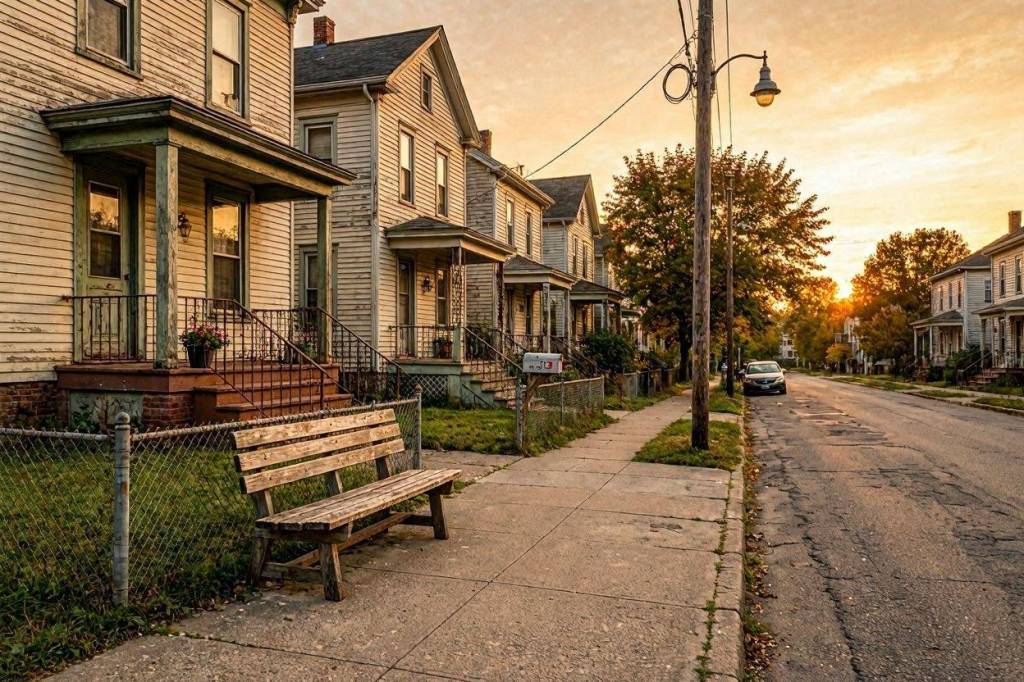
Memories possess their own distinct geography.
There are specific coordinates in this world that seem to preserve something ethereal, holding onto the fragments of who we once were. This does not necessarily happen because an extraordinary, earth-shattering event occurred there—the kind that warrants a brass plaque on a stone wall or a footnote in a local history book. More often than not, the most stubborn guardians of our past are the most common, everyday spaces.
It is a random, unremarkable street corner; the quiet kitchen of a weathered house where the linoleum has faded; a solitary bus stop exposed to the elements; or a neglected backyard where summer afternoons once felt entirely eternal. These are the stages of our lives that the rest of the world passes by without a second glance.
And yet, when we return to them after years of exile, we are struck by a sudden, undeniable sensation: something is still waiting for us, suspended in the very air. It functions as a sort of quiet, acoustic echo of an era we thought we had left behind.
Cold reason tells us that inanimate spaces cannot possess memory. They are, after all, nothing more than an arrangement of brick, mortar, timber, asphalt, and earth. They do not possess consciousness; they do not reminisce, nor do they feel the ache of longing. But the heart operates under a completely different set of laws. There are spaces that seem to guard, with an astonishing and almost frightening fidelity, an ancient, unaltered version of ourselves.
Think of that bedroom where you spent countless late nights drawing up maps of an unwritten future. Think of the winding path you walked hundreds of times, your head heavy with doubts, wondering if you would ever find your footing in the world. Or that specific park bench where a single conversation unfolded—a conversation that, though you did not recognize it at the moment, quietly shifted the entire trajectory of your life forever.
When we return, we discover that the physical stage remains almost identical, defiantly resisting the passage of time. The walls are painted the same hue; the trees still cast the same geometric shadows. But we are no longer the characters who belonged on that stage. The hands that today reach out to touch that same wooden door have since carried the weight of other, heavier losses. The eyes that look out through that window pane have, in the intervening years, gazed upon entirely different landscapes.
Perhaps that is why certain places inflict such a sharp, inexplicable jolt upon our senses the moment our feet cross their thresholds. It is not exactly nostalgia, which can be cheap and sentimental. Nor is it a simple sadness for what has been lost to the years. It is, rather, the profound wonder of a collision between two distinct timelines: the present self we have grown into, carrying all our hard-won certainties and scars, and the ghost of the person who once stood right there, paralyzed by fears or burning with expectations that time has already resolved. It is the eerie, beautiful experience of looking your own past self directly in the eye.
Often, it does not require a grand, conscious act of remembrance to summon these ghosts. It happens in an instant. You turn a familiar corner, inhale a sudden, particular scent of damp earth and aging wood, or catch a very specific slant of golden afternoon light falling across the floorboards. In that split second, things that had spent a decade in absolute silence come rushing back to the surface.
This does not happen because the place itself remembers. It happens because our internal compass remembers better when we are standing near the exact, physical coordinates where a miracle occurred, or where a wound was first opened. Memories have weight, relief, and texture. They do not float aimlessly in the void of our minds; instead, they adhere with a fierce, stubborn tenacity to the cracks in the pavement, to the reflections in old window panes, to the rough bark of the trees, and to the cold brass of doorknobs.
Because of this, certain places welcome us back like old friends who know our secrets, returning our gaze in profound silence, intimately recognizing the architecture of our souls. And other places, conversely, feel utterly unrecognizable and foreign to us, even when we know with historical certainty that we once belonged to them. That estrangement is a different kind of gift—it is the tangible proof that a particular cycle of our life has completely closed.
With the passage of time, we finally come to understand the true mystery of these geographic pilgrimages. We do not actually return to the old, familiar places to see how the facades have aged, or to check if the tree in the garden has grown toward the sky.
We return, in truth, to discover how much we ourselves have changed along the way.
And in that silent encounter, within that tiny corner of the world we once inhabited, the past and the present manage to share the exact same space for a brief, breathless moment. We look at our younger selves across the vast chasm of the years, we smile at them with deep compassion, and, at long last, we give ourselves permission to move forward.
Part of the Memory Series, a collection of reflections on place, memory, identity, and the passage of time.
This essay was originally written in Spanish under the title Los lugares recuerdan de otra manera. The original version may be read here:
https://unblogparaelalma.blogspot.com/2026/05/los-lugares-recuerdan-de-otra-manera.html
© W. E. Ticas
 W. E. Ticas